Contact Info

 Zoho Inventory in Iraq
Can Zoho Inventory run stock for an Iraqi importer or distributor?
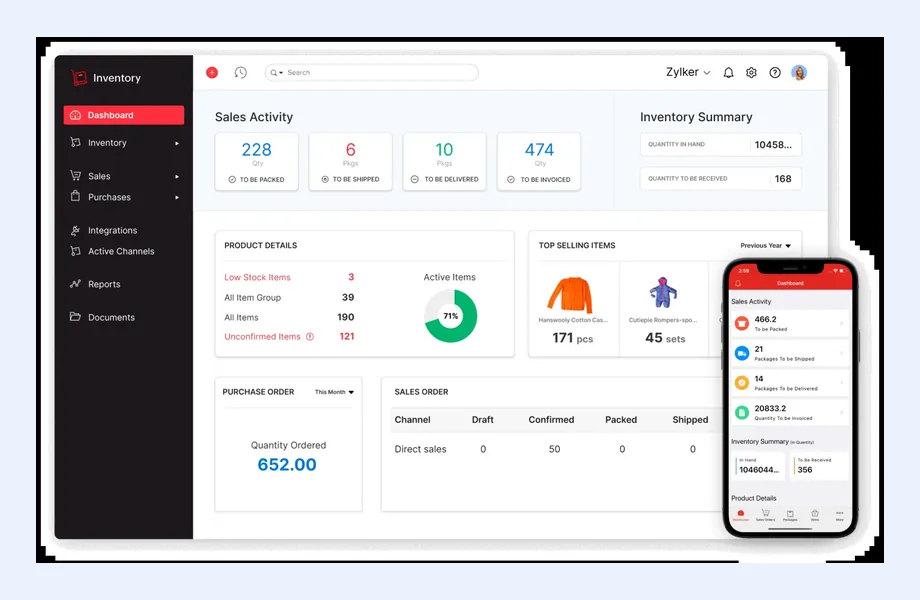
Zoho Inventory can run stock for an Iraqi importer or distributor that resells finished goods from a few warehouses and delivery vans. It tracks items, batches with expiry, serial numbers and purchase orders priced in dollars while sales may run in dinars. A consultant plans landed cost, stock per federal and Kurdistan Region entity, counts on weak signal, tax on invoices through Zoho Books and when an ERP would serve better. I advise remotely.
Last reviewed by Vikas Saroj
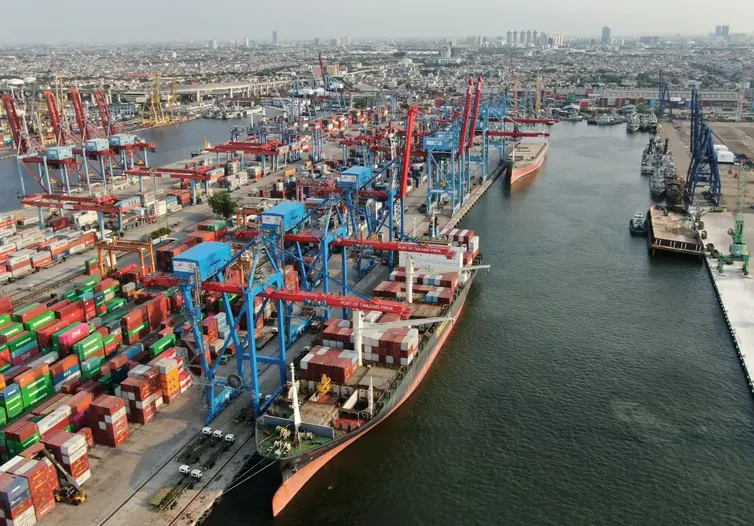
Iraqi distributors of food, medical supplies, spare parts, generators or building materials buy abroad in dollars, bring goods in by sea or by road, and sell across several governorates through their own vans, sub-dealers and walk-in customers, collecting much of it in cash. When stock lives in a storekeeper's notebook and prices in a salesman's phone, nobody knows the real margin or which van holds what.
I work remotely with businesses in Iraq as an independent Zoho Inventory consultant. There is no Zoho partnership and no license income behind my advice. The engagement runs in English: I trace how goods are purchased, cleared, stored, loaded onto vans and sold, check Zoho Inventory against each step, then design the configuration or review an implementer's work. Arabic or Kurdish wording on documents is reviewed by bilingual colleagues.
 What I Do
Each item settles a rule that otherwise gets decided differently by every storekeeper, driver and salesman.

I follow a recent shipment from supplier invoice through freight, border or port charges, clearing and inland transport, and agree with your accountant which costs go into stock and at which rate each bill is booked.

I set out price lists for wholesale, sub-dealer and retail customers, the currency each uses, who may change prices and how a quote in dollars becomes an invoice and payment in dinars or dollars.

I model city warehouses, branch stores and delivery vans as stock locations where it helps, with loading, return and transfer steps that make every unit's position visible at the end of each day.

I decide which items need batches with expiry and which need serial numbers, for example medical supplies versus generators, so tracing works where it matters and staff are not slowed elsewhere.

I design stock for federal Iraq and Kurdistan Region companies as separate organizations, with goods moving between them recorded as sales and purchases rather than simple transfers.

Using your own volumes, costing policy and any assembly or project material issues, I judge whether Zoho Inventory is enough or whether Odoo, ERPNext or another ERP fits better, and say so plainly.
How I Work
Trace goods and cash end to end
 Re-enter a recent import
Ride along a van route
List tracked item types
Agree rate and price rules
Re-enter a recent import
Ride along a van route
List tracked item types
Agree rate and price rules
Configure per entity, then test
Items, units and locations
Landed cost checked by accountant
Van loading and return flow
Invoices tested in Books
Opening stock that matches shelves
Count per warehouse and van
Opening values agreed
Signal tested in each store
Cycle counts on a schedule
Iraqi distributors commonly pay suppliers in dollars or euros, while charges on the way in arrive from freight companies, clearing agents, border or port operators and local transporters, some in dollars and some in dinars. If those costs are not added to the items, the gross margin on every sale is overstated, and the error grows with each shipment.
Zoho Inventory, with Zoho Books behind it, records purchase orders and bills in the currency the supplier invoices in, and landed costs can be loaded onto received goods. Which allocation options your edition provides, and how they behave with bills in different currencies, should be confirmed and tested before you rely on them. Your accountant and I run a trial:
On the sales side, many distributors quote some customers in dollars and others in dinars. I agree which currency each price list uses and how a customer's currency is set, because switching a customer's currency after the first invoice is difficult. Customs duties and the tax treatment of imports are for your accountant or clearing agent to define; the configuration records their answer the same way every time.
An Iraqi distributor may hold stock in a main warehouse, smaller stores in other cities and on a fleet of delivery vans that leave full in the morning and return with cash, returns and unsold goods. If vans are invisible to the system, so is a large share of the stock.
Entity structure changes the picture. A federal Iraq company and a Kurdistan Region company kept as separate Zoho organizations each hold their own stock. Goods moving from one to the other are a sale by the first and a purchase by the second, with matching references and prices, not a warehouse transfer. I design those pairs with your accountant and test them before go-live. The Zoho One in Iraq page discusses how the entities sit inside the wider suite.
Different goods need different tracking, and applying one rule to everything either loses traceability or slows staff down.
Hot summers make expiry tracking more than a formality for food and medical goods, so I agree how near-expiry stock is reported and who decides on discounts or returns to the supplier. Find out whether your edition proposes the earliest-expiring lot when picking or leaves the choice to the storekeeper, and train staff for the answer.
Serial numbers also connect stock to service. When a customer calls about a faulty generator, the agent should find the unit, its sale date and its warranty in seconds. That link is designed together with Zoho Desk in Iraq, so after-sales does not start with a search through paper delivery notes. The inventory and warehousing page covers the general method.
Orders reach Iraqi distributors through salesmen visiting shops, phone calls, messaging apps and, for some retailers, an online store. Each route needs one path into the system: a sales order entered by a named person when the order is taken, so stock is reserved and the van is loaded from a list rather than from memory.
Cash is the harder part. Drivers and salesmen often collect payment on delivery in dinars or dollars. I design a daily settlement routine:
Online channels need checking: Zoho lists ecommerce and carrier integrations for Inventory, but coverage of local platforms and couriers in Iraq may be limited, so those orders are often handled manually or through a simple import.
Tax belongs on the invoice, and invoices are raised in Zoho Books. Which taxes apply to which sale, per entity, is defined by your tax advisor in writing, and I check that each order raised in Inventory turns into a Books invoice carrying the correct tax, currency and legal wording, with Arabic or Kurdish text approved by bilingual colleagues. The Iraq CRM consultant page looks at routes to market and sales visits.
Zoho Inventory suits trading: buying finished goods and reselling them. Some Iraqi businesses need more, and I say so before they commit:
When several apply, an ERP evaluation using your own shipments, van routes and invoices shows the difference better than any demo. For platform choice, read the Iraq ERP consultant page; my other remote services are on the Iraq hub.

Tell me about your business and current systems. I’ll suggest the most sensible first step.
Book a Consultation
Not sure which ERP you need?
Share your business requirements with me and I will help you understand the right process, architecture and platform before implementation.
FAQ
Yes, with Zoho Books behind it. Purchase orders and bills carry the supplier's currency, price lists and customers carry the selling currency, and each transaction converts at a rate set by an agreed rule. Your accountant decides the base currency and rate source, and I test the rules on real documents.
They can be modeled as warehouses or locations, loaded by transfer and reconciled when they return. Whether that is worth the extra steps depends on how many vans you run and how much stock each carries. I design the routine with your drivers and storekeepers before deciding.
Usually each entity keeps its own Zoho organization and its own stock, so goods moving between them are recorded as a sale and a purchase with matching references. If goods flow between them constantly, an ERP with multi-company stock may suit better, which I assess with you.
It needs a connection, so I test signal in each store, plan counts with printed sheets as backup and confirm any offline support in the mobile app for your edition. A backup connection in the main warehouse keeps receiving and dispatch moving when the main line drops.
Every business is different. Share where you are today and what you want to fix, and I’ll tell you honestly whether and how I can help.
Book a Consultation
Insights
 Book a Consultation
Book a consultation to talk through your processes, systems and goals. I’ll reply with practical next steps - no obligation.