Contact Info

 ERPNext in Iraq
Why would an Iraqi company choose ERPNext?
Iraqi companies choose ERPNext when they want open-source software they can run on their own server or on managed Frappe Cloud hosting, with projects, buying, stock and accounting in one system. An ERPNext consultant designs the hosting and backup model for unreliable connections, the company structure for federal and Kurdistan Region entities, dinar and dollar rules and maintainable customization. I advise independently and remotely.
Last reviewed by Vikas Saroj
For an Iraqi contractor or trader, ERPNext offers something many cloud products do not: a choice about where the system runs. It can sit on a server the company controls, close to the people who use it, or on managed hosting. Combined with project, stock and accounting features in one open-source package, that flexibility is often why ERPNext reaches the shortlist.
Flexibility also means decisions. Someone has to choose the hosting model, own backups and updates, keep customization under control and make sure the accounting design suits each entity. I help Iraqi companies make those decisions on evidence, independently of Frappe and of any developer, and I oversee the build remotely.
 What I Do
Each service addresses a point where Iraqi ERPNext projects either become dependable or quietly depend on one person.

I set requirements for where ERPNext runs, how backups are taken and tested, how a site keeps working during an outage and how entries made on paper are caught up afterward.

I configure projects per contract and cost centers per site, so material requests, purchase orders, stock entries, timesheets and expense claims carry costs to the right job and show committed against actual.

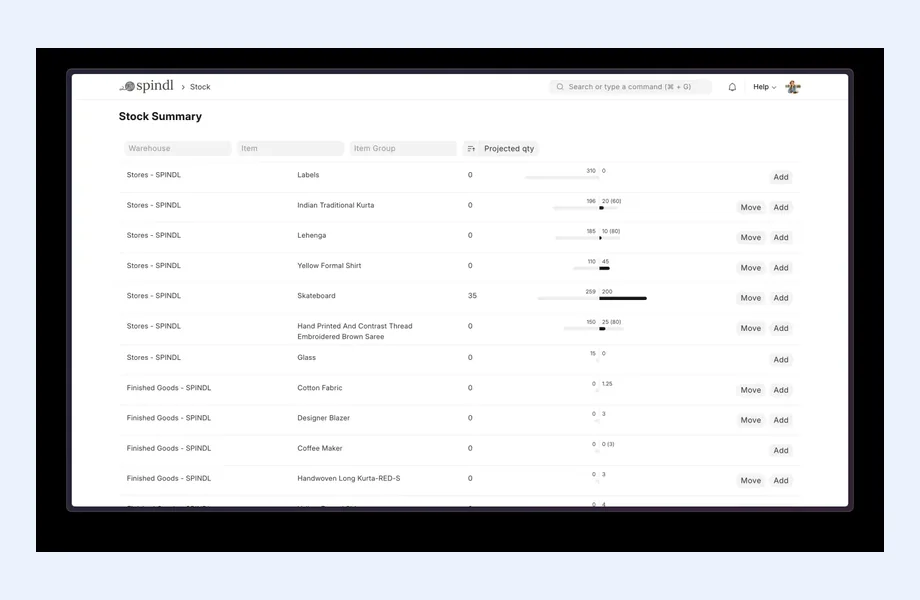
Warehouses for each yard, store and site, with material requests from site, transfers, batch or serial tracking where needed, and stock reconciliation routines that storekeepers can follow without help.

Federal Iraq and Kurdistan Region companies hosted together on one site or apart on two, decided on access, consolidation and hosting needs, with inter-company invoices and consolidated statements checked by finance.

I define company currencies, currency exchange records and whether buying and selling rates differ, then test dollar contracts paid in dinars, supplier payments abroad and month-end revaluation.

I test each requested change against what ERPNext does out of the box. Whatever survives that test is built in a documented custom app, so upgrades remain feasible and a different developer can maintain the work later.
How I Work
Hosting, entities and scope
 Hosting option chosen with reasons
Entity model agreed
Cost coding defined
Developer shortlist reviewed
Hosting option chosen with reasons
Entity model agreed
Cost coding defined
Developer shortlist reviewed
Configure and test on staging
Projects and cost centers
Warehouses and material requests
Exchange record tests
Restore from backup rehearsed
Live use and clear ownership
Balances reconciled per company
Offline procedure in use
Administrator trained
Upgrade schedule agreed
ERPNext can run on Frappe Cloud, the managed hosting service from the company that develops it, or on a server that your company or a provider manages. For Iraqi businesses the decision is rarely about software features. It is about keeping the system available where people work.
A self-managed server at head office can stay reachable on the internal network when the external connection is weak, which some companies value highly. It also brings duties: stable power, cooling, security updates, monitored backups and a person who can restore service. A server in a data center, or Frappe Cloud, removes the building risk but makes every user depend on an internet link. Some groups blend the two ideas, for example cloud hosting with backup connections at the main offices.
Whatever the model, I require:
I compare the options in writing and attach the result to the support agreement. The ERPNext consulting page describes the platform in general.
ERPNext combines projects, buying, stock and accounting in a way that suits Iraqi contractors, oil and gas services firms and import traders, provided the structure is planned. For contract work I set up a project per contract and cost centers or accounting dimensions for sites, so material requests, purchase orders, stock issues, timesheets and expense claims all carry their costs to the right job. Committed cost from open purchase orders can then be compared with actual cost from posted documents, project by project.
For traders, the buying cycle covers purchase orders in supplier currency, landed cost vouchers for freight and clearing, receipts into warehouses and sales from stock with price lists by customer group. Batch or serial tracking is added where products need it.
International partners and main contractors often ask for proof. ERPNext keeps a version history on documents, supports attachments and lets you add approval workflows to purchase orders, invoices and payments. I specify which documents need approval, by whom, and which attachments each partner expects, so the evidence lives in the system rather than in email threads. Legacy data tends to sit in spreadsheets and an entry-level accounting program, so I plan which balances, open contracts and stock move, and reconcile each load. The project costing page explains the general approach.
A group holding a federal Iraq company plus a Kurdistan Region company can operate both as separate companies on a single ERPNext site, each with its own chart of accounts, tax templates, naming series and permissions. Alternatively, each can have its own site, which may suit groups whose entities are hosted in different places or managed by different teams. I compare both models on consolidation, user access, hosting and support effort.
On localization, check what your ERPNext version and any regional apps provide for Iraq. Without a specific package, the implementer starts from a standard chart of accounts and adapts it with each entity's accountant, and tax templates are configured from the guidance your advisors provide. Interpretation stays with them; I test that documents and reports follow it.
Currency design is agreed with finance:
Sales and purchases between the pair run through inter-company invoices, keeping both ledgers aligned. The ERP consultant for Iraq page discusses entity design across platforms, and ERPNext Accounting covers the finance features.
In Iraq, ERPNext delivery can come from consultancies, solo developers or company IT staff trained on Frappe. Their depth of experience varies a great deal, so I ask candidates for comparable recent projects, how they manage upgrades, whether their custom work lives in a separate app and how they respond to urgent issues during the Iraqi working week.
Customization is where open-source projects most often go wrong. The framework lets a developer add a field or a script very quickly, which is helpful until the system becomes something only that developer understands. My order of preference is standard feature, then configuration, then a custom app, with core code left untouched. Each change is logged with its business reason.
Documents are a frequent area of custom work. Invoices, delivery notes and statements may be needed in Arabic, Kurdish or English, with print formats designed per language and right-to-left text where Arabic or Kurdish requires it. Your bilingual team signs off wording and layout once the developer has built them, as the engagement runs in English. The interface translations should also be tried by the people who will use them daily.
Finally, I make sure an internal administrator can manage users, roles and routine settings without calling the developer. My implementation oversight service describes how I stay involved through go-live.
ERPNext is a sound choice for many Iraqi companies and a poor one for some. I would recommend looking elsewhere when:
An ERP evaluation tests these points with your own scenarios. The ERPNext vs Dynamics 365 comparison and the Iraq hub add context.

Tell me about your business and current systems. I’ll suggest the most sensible first step.
Book a Consultation
Not sure which ERP you need?
Share your business requirements with me and I will help you understand the right process, architecture and platform before implementation.
FAQ
ERPNext is a web application, so users need to reach the server. A server on your own network can keep head office working when external links are weak, and written offline procedures cover remote sites. If you need offline entry, test the point of sale and mobile options in your version rather than assuming they cover it.
Neither is better in general. Frappe Cloud removes server administration but depends on internet access at every location. Self-hosting gives control and local access but needs dependable power, backups and an administrator. I compare both against your sites, IT capacity and partner expectations, and document the choice.
Yes. Each can be a separate company on one site, with its own accounts, taxes, numbering and user permissions, or each can have its own site. I compare those models on consolidation and support, and your accountants in each area confirm the tax and statutory treatment that I build into the configuration.
Ideally an internal administrator for routine tasks plus a developer or provider under a written support agreement for upgrades and fixes. I check that custom work is kept in a separate documented app, so a second developer can take over if needed and the business is not dependent on one person.
Every business is different. Share where you are today and what you want to fix, and I’ll tell you honestly whether and how I can help.
Book a Consultation
Insights
 Book a Consultation
Book a consultation to talk through your processes, systems and goals. I’ll reply with practical next steps - no obligation.