Contact Info

 Lyon
Lyon
Why bring in an ERP consultant for a Lyon manufacturer?
For a Lyon business, an ERP consultant translates production, quality, stock and finance processes into requirements, helps select a suitable platform and supervises implementation. Around Lyon that often means batch and recipe control for chemical and life science firms, traceability and shelf life for food producers, regional distribution along a major transport corridor and trade with nearby Switzerland and Italy. I work remotely in English.
Last reviewed by Vikas Saroj
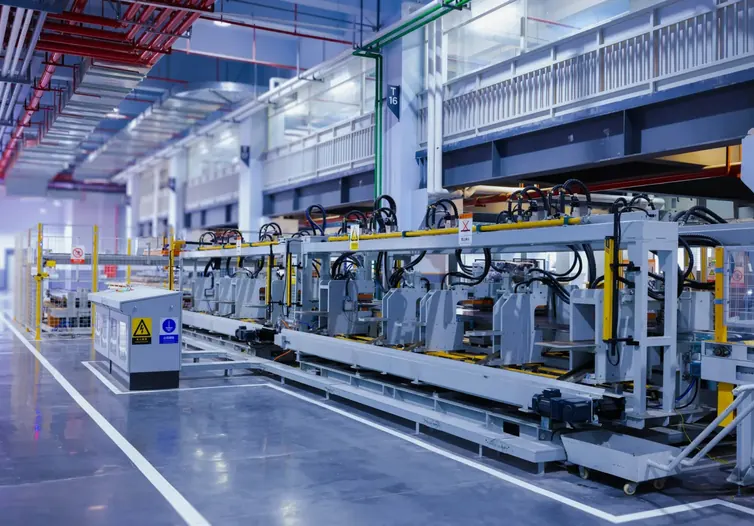
I work remotely with businesses in Lyon and across the Auvergne-Rhône-Alpes region. The Lyon area combines a long industrial history with modern life sciences: chemical plants south of the city, pharmaceutical and biotech companies, food producers and specialist ingredient firms, technical textiles, mechanical engineering and plastics processing, plus a strong base of distributors and logistics operators.
Many of these firms are mid-sized, family-owned or part of larger groups, and they make products where recipes, batches and quality records matter. I help them write those requirements clearly and find a platform that handles them without endless custom development. On-site days are possible by arrangement.
 What I Do
Formulated products, regulated quality and cross-border trade shape most ERP conversations with companies around Lyon. These are the areas I usually cover.

I define how formulas, ingredient substitutions, yields and scaled batch sizes are held in the system, and how changes are approved, so production, purchasing and costing always use the current recipe.

From raw material lot to finished batch and customer delivery, I specify the records needed to trace forward and backward quickly, and design the recall report you hope never to run.

Material on hold, in quarantine, released or rejected must be visible to planning and the warehouse. I map inspection points and status rules so unreleased stock cannot be shipped by mistake.

For food and ingredient makers, I scope shelf life, best-before dates, allergen data, catch weight where relevant and retailer labeling, then test candidate systems against your own product range.

Regional distributors and logistics firms around Lyon serve customers across France and beyond. I map warehouses, delivery routes, replenishment and pricing so the ERP supports fast, accurate service.

Selling to Switzerland involves customs because it sits outside the EU, while Italy is an intra-EU market. I define the documentation, tax codes and data the ERP needs for each route.
My Consulting Journey
Business first, technology second. You can hire me for one step - a BRD, a gap analysis, a vendor shortlist - or for the whole journey.
How I Work
Learn the plant and the paperwork
 Walk production by video
Collect batch records
Map quality checkpoints
List customer requirements
Walk production by video
Collect batch records
Map quality checkpoints
List customer requirements
Requirements, demos and selection
Write process industry requirements
Demo a real recipe
Test a mock recall
Compare support options
Oversee delivery to stable use
Validate master data
Run acceptance with operators
Plan cutover between campaigns
Review first batches costed
Lyon is the center of one of France's most important economic regions outside Paris. South of the city, along the Rhone, lies a long chemical and industrial corridor that has hosted refining, chemicals and related industries for generations. Life sciences are a major strength, with pharmaceutical production, vaccine and biotech research, diagnostics and medical technology all present in the metropolitan area. The city's reputation for gastronomy is matched by a real food industry: producers of charcuterie, cheese, bakery and prepared foods, ingredient suppliers and wholesalers. Silk weaving once defined Lyon, and its heir today is a technical textiles sector, while mechanical engineering, plastics processing and energy equipment are spread across the wider region.
Geography matters too. Lyon sits on the main north-south route between northern Europe and the Mediterranean, and the Alps, Switzerland and Italy are close. That has made the area a natural base for distribution centers and logistics firms.
For ERP work, this means most Lyon conversations are about production and supply chain rather than pure services. National requirements such as e-invoicing, the French audit file and local accounting rules are handled on my France-wide ERP page, leaving this page free for the operational side.
Process manufacturers do not build products from parts. They mix, react, blend and fill, working from formulas that may change with raw material quality, batch size or customer specification. A generic discrete manufacturing setup handles this badly. The ERP needs recipe management with versions and approvals, batch production with actual consumption and yields, co-products and by-products where they occur, and costing that reflects what really happened in each batch.
Quality is tightly bound to the process. Incoming materials may need testing before use, finished batches need release before shipment, and documentation must show who approved what and when. Hazardous materials add safety data, storage rules and transport classifications. I write these up as numbered requirements, building on my pharmaceutical ERP framework and the manufacturing ERP checklist, and I make sure every regulated topic is marked for review by your quality or regulatory team, because GMP and chemical regulations are specialist areas outside my remit.
During selection, each vendor demonstrates one of your real formulas, a quality hold and release, and a mock recall tracing one raw material lot forward to every customer delivery. How smoothly that goes says more about fit than any brochure. I also check whether a separate laboratory or quality system will remain, and how it would exchange data with the ERP.
Food businesses around Lyon range from artisanal producers that have grown into regional brands to industrial processors supplying supermarkets across France and export markets. Their ERP requirements overlap with chemicals in batch and traceability, but they add pressure of their own: short shelf lives, best-before and use-by dates, allergen information, variable weights, seasonal raw materials and the strict delivery and labeling expectations of large retail customers.
I begin with the flow from purchase of raw materials, through production and packing, to dispatch and invoicing, and capture every point where dates, lots and weights must be recorded. Retailer requirements often drive more change than internal needs, so I list the documents, labels and electronic messages your customers expect and check how each candidate handles them. Promotions and retailer deductions deserve particular attention, because they can erode margin quietly if the ERP cannot link them back to products and customers.
Restaurants, caterers and food wholesalers in the city have related needs on a smaller scale: recipe costing, purchasing from many suppliers and waste control. The food and beverage ERP page lists the baseline, which I adapt to the size and channel mix of each business.
The Lyon area's position on major road, rail and river routes, along with its airport, makes it a logical base for regional and national distribution. Wholesale distributors of industrial supplies, building materials, healthcare products and consumer goods serve customers across France from warehouses in the eastern suburbs and along the motorway corridors. Their ERP needs focus on stock availability, replenishment across several sites, customer-specific pricing and fast, accurate delivery. I use my distribution ERP checklist to scope these requirements.
Proximity to Switzerland and Italy brings cross-border trade into many projects. The two routes behave differently. Italy is an EU member, so sales there follow intra-community VAT rules, with the corresponding data on invoices and in periodic reporting. Switzerland is outside the EU customs territory, so shipments involve customs declarations, origin documents and possibly duties, and payments may be in Swiss francs. I define the tax codes, documents, currency handling and data the ERP must supply for each case, and I ask your accountant and customs broker to confirm the treatment before anything is configured.
Getting this right early avoids a common problem: a system that works perfectly for domestic orders but forces manual workarounds for every export.
Lyon shares Central European time with the rest of mainland France, so a working morning in Lyon overlaps with my afternoon in India. I hold workshops, vendor demonstrations and acceptance sessions in that shared time and use the remaining hours for specification writing, data checks and review of partner deliverables. Production processes can be walked through over video, with a supervisor on your side showing the line, the batch records and the warehouse while I ask questions.
The engagement runs in English. Plant operators, quality staff and warehouse teams often work in French, so French labels, batch documents, work instructions and training content are prepared and proofread by your plant staff or a local partner. The specification marks which items need French wording and who owns them.
Process plants and food producers have production campaigns and seasonal peaks, so I plan cutover around them, prepare a detailed checklist and agree how open batches and stock in quarantine are migrated. If an on-site visit adds real value, for example before design sign-off, it can be planned by arrangement. Companies headquartered in the capital may want the Paris page, and the France hub gives the national picture. You can contact me to discuss your plans.

Tell me about your business and current systems. I’ll suggest the most sensible first step.
Book a Consultation
Not sure which ERP you need?
Share your business requirements with me and I will help you understand the right process, architecture and platform before implementation.
FAQ
Some can, some only with add-ons, and some not well at all. The deciding points are recipe versions, batch yields, co-products, quality status and lot traceability. I write those as test scenarios using your own formulas and ask each vendor to run them. The results usually make the shortlist obvious.
No. Computer system validation under pharmaceutical rules is a specialist activity carried out by your quality team or a validation provider. I help define the business and system requirements, document processes and prepare acceptance tests, which give that validation work a clear starting point.
Because Switzerland is outside the EU customs territory, the ERP usually needs export documents, customs data on items, possibly Swiss franc pricing and a way to record duties or broker charges. I define those requirements and ask your customs broker and accountant to confirm the rules that apply to your shipments.
I look at your production calendar and retailer commitments, pick a quiet period, and plan the migration of open orders, lots and dated stock in detail. Trial runs check that best-before dates and lot numbers come across correctly. A fallback plan is agreed before the switch, so deliveries to customers are not put at risk.
Every business is different. Share where you are today and what you want to fix, and I’ll tell you honestly whether and how I can help.
Book a Consultation
Insights
 Book a Consultation
Book a consultation to talk through your processes, systems and goals. I’ll reply with practical next steps - no obligation.