Contact Info

 Montreal
Is Odoo a good fit for a Montreal business?
Odoo can fit Montreal businesses that make things to order or sell through several channels at once: furniture and millwork shops building custom pieces, bakeries running retail counters alongside wholesale routes, and print and sign shops turning quotes into jobs. As an independent Odoo consultant working remotely, I test those flows against Odoo before you commit and help you choose an implementer, edition and scope that suit your size.
Last reviewed by Vikas Saroj
Montreal has many owner-run production businesses that sit between a craft shop and a factory: a cabinetmaker in the east end building kitchens to measure, a bakery with several neighborhood counters and a delivery van serving cafes, a print shop in an old industrial building producing signage for festivals and retailers. They need more than accounting software but less than a large manufacturing ERP, which is often where Odoo enters the conversation.
I work remotely as a freelance Odoo consultant with no ties to Odoo or to any implementer, and I sell no licenses. My role is to check the fit honestly, design the scope and stay on your side while the implementer builds it.
 What I Do
I start from the work on your floor or behind your counter, then decide which Odoo apps belong in the first phase.

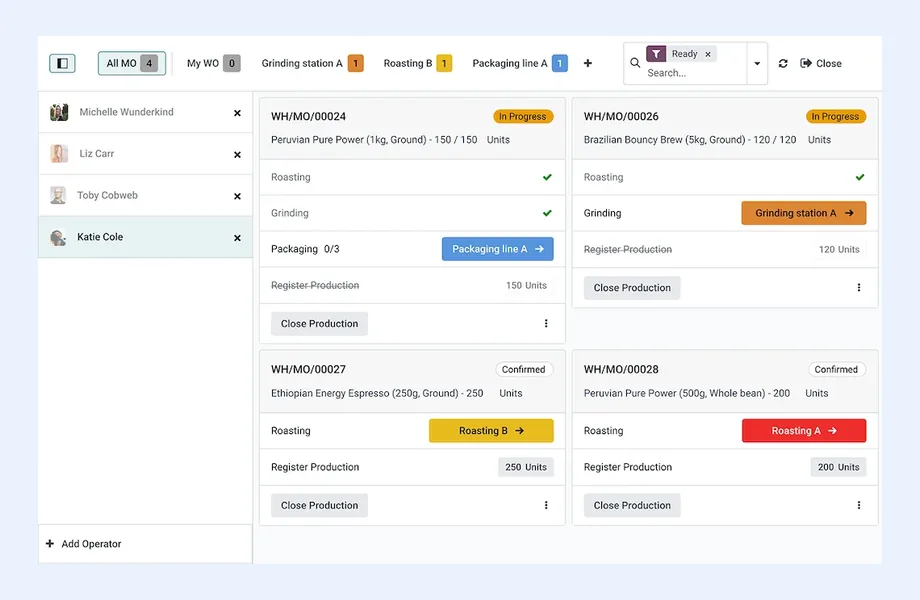
For cabinet, furniture and millwork shops, I scope how a measured quote becomes drawings, a bill of materials, cut lists, work orders and installation, and test whether Odoo's configurator and manufacturing apps can carry it.

For bakeries and specialty food shops, I design how point of sale in each store, standing wholesale orders and daily production planning share one product list, so the overnight bake matches tomorrow's demand.

For print, signage and display shops, I map estimating, artwork approval, production steps, outsourced finishing and installation, then judge whether Odoo with light customization fits or a print-specific system is wiser.

I compare the Odoo editions and hosting options against the apps you actually need, flagging features such as Studio or quality control that may depend on the edition.

I prepare a scope document, invite proposals from Odoo implementers in Quebec or elsewhere, and compare them on approach, assumptions and the French-language work each one includes.

During the build I review configuration decisions, keep customizations in check, write test scenarios from your real orders and confirm the system is ready before your team relies on it.
How I Work
One real order, start to finish
 Trace a quote to delivery
List every spreadsheet used
Note costs that go missing
Agree first-phase priorities
Trace a quote to delivery
List every spreadsheet used
Note costs that go missing
Agree first-phase priorities
Odoo against your own examples
Rebuild sample orders in Odoo
Mark gaps and workarounds
Choose edition and hosting
Select the implementer
Build, test and go live
Review configuration choices
Limit custom code
Run scenario tests
Support the first weeks live
Quebec has a long furniture and woodworking tradition, and greater Montreal still has many shops producing kitchens, custom furniture, store fixtures and architectural millwork for condos, offices and restaurants. Almost every order is different. A kitchen quote starts from measurements and a design, then becomes a list of boxes, doors, panels, hardware and finishes, each with its own material and labor.
The key question for Odoo is how much of that variation can be expressed through product variants, configurable options and bills of materials whose lines change with the chosen options, and how much will need custom development. I take a few of your recent orders and rebuild them in Odoo during the fit test: the quote, the bill of materials, the work orders through cutting, edging, assembly and finishing, and the installation visit. That shows quickly whether the standard tools hold up.
Many shops use design and cutting software that already produces cut lists and machine files. In those cases Odoo does not need to replicate them; it needs a clean way to receive the material list and labor estimate for each job. I scope that link and make sure actual hours and materials come back to the job so you can see whether each kitchen made money. The Odoo Manufacturing page covers the app itself.
Montreal's bakeries, bagel shops, patisseries and specialty food producers often run two businesses at once: retail counters in one or more neighborhoods, and wholesale deliveries to cafes, restaurants and grocers across the city. Both draw on the same overnight production, which has to be planned from yesterday's sales, standing orders and whatever the weather and the weekend are likely to bring.
Odoo is attractive here because point of sale, sales orders, inventory and manufacturing share one product and recipe list. I design how each counter's sales flow back daily, how wholesale customers' standing and one-off orders are captured, how a production plan for the night is generated from both, and how ingredients are consumed against recipes. Waste and unsold product at closing are recorded by store so that over-production becomes visible rather than a vague feeling.
I also check the details that make or break adoption: how fast the point of sale is at a busy counter, how it behaves if the internet drops, how delivery routes and invoices for wholesale customers are produced each morning, and whether French receipts and product names read naturally to customers. Food safety and labeling obligations belong with your regulatory advisor; the system simply needs to hold the information they define. See restaurant ERP for related requirements.
Montreal's busy calendar of festivals, trade shows, retail launches and cultural events keeps a cluster of print, signage and display companies working to tight deadlines. Their jobs are rarely standard products. A quote depends on material, size, quantity, finishing, installation and rush charges, and the same customer may order banners, vinyl, rigid signs and printed packaging within one week.
The workflow I map runs from estimate to artwork proof, approval, production on specific machines, outsourced finishing, delivery or installation, and invoicing, with the actual cost compared to the estimate at the end. Odoo can handle the sales, purchasing, project and invoicing parts well. Estimating with many variables and machine scheduling are where it may need customization or a dedicated print management system connected to it.
I am direct about that choice. If your estimates are simple enough to configure, Odoo can cover the whole business. If your estimators rely on complex pricing tables and imposition rules, a print-specific system with Odoo or another ERP behind it may be a better result than a heavily customized Odoo that is hard to upgrade. For job-level profit tracking in general, see ERP for job costing.
Odoo is developed by a company based in Belgium, so French has been part of the product from early on, and the interface is available in French. Its default wording, however, tends to follow European usage, and some terms may read differently to Quebec users and customers. Before go-live, your French-speaking staff should review the screens they use, documents sent to customers and email templates, and adjust wording where needed. That review is part of the project plan, not an afterthought.
Greater Montreal has Odoo implementers of different sizes, and others across Canada and abroad work remotely with Quebec clients. I prepare a scope document from the fit test and compare proposals on what matters: how many of your processes are covered by standard features, how much custom development is proposed, who migrates and cleans data, how French templates and translated customizations are handled, and what support looks like after launch. The engagement runs in English, and where a proposal is in French, a bilingual person on your team checks the passages that matter.
Edition choice also matters. Some apps and features, such as Studio, quality control or rental, may depend on the edition, and hosting choices affect upgrades and customization. The Odoo in Canada page covers tax setup and migration from other systems.
Odoo is not always the answer. A millwork shop whose real need is better cutting optimization may gain more from improving its design software than from a new ERP. A single bakery counter with no wholesale business may be well served by a good point of sale and accounting package. A print shop with complex estimating may need a print management system first. And any business expecting heavy customization should weigh the long-term cost of maintaining it through upgrades.
The engagement is remote, with visits possible by arrangement, for example to walk a shop floor before the fit test. Sessions run in English, and staff who prefer French can explain their work through a bilingual colleague. Between sessions I document processes, prepare test scenarios and review the implementer's work.
I do not replace your implementer; I keep the project honest on your side. If you are still choosing between platforms, the Montreal Zoho consultant and Montreal ERPNext consultant pages describe different fits, and the Montreal ERP consultant page covers wider selection work. The global Odoo consulting page explains my general approach to Odoo projects.

Tell me about your business and current systems. I’ll suggest the most sensible first step.
Book a Consultation
Not sure which ERP you need?
Share your business requirements with me and I will help you understand the right process, architecture and platform before implementation.
FAQ
Often, through configurable products, variant-based bills of materials and work orders, but it depends on how varied your orders are. I rebuild a few of your recent orders in Odoo during a fit test. If they need heavy custom development, it is better to know before you sign than after.
Yes, that is one of the stronger cases for Odoo. Point of sale in each store, wholesale orders, recipes and production planning share one product list. I check counter speed, offline behavior and the morning routine for delivery invoices before recommending it.
The interface is available in French, but default wording tends to follow European usage. I plan a review in which your French-speaking staff check the screens they use, customer documents and email templates, and adjust terms that read oddly in Quebec. That work is scheduled in the project, not left to the end.
I act on your side as an independent consultant: fit testing, scope, implementer selection and oversight of the build and testing. Configuration and development are normally done by an implementer you choose. I take no commission from implementers and resell no Odoo licenses.
Every business is different. Share where you are today and what you want to fix, and I’ll tell you honestly whether and how I can help.
Book a Consultation
Insights
 Book a Consultation
Book a consultation to talk through your processes, systems and goals. I’ll reply with practical next steps - no obligation.