Contact Info

 Zoho Analytics UK
How does a Zoho Analytics consultant help a UK business?
In the UK, a Zoho Analytics consultant turns Sage, Xero, Zoho Books and CRM data into the monthly management accounts, debtor reports and sales dashboards that directors, banks and invoice finance providers expect. I agree each KPI with your finance director or accountant, model sterling and euro entities together, apply UK GDPR access rules, and recommend Power BI instead where your Microsoft estate makes it the better fit.
Last reviewed by Vikas Saroj
In many British SMEs the monthly management accounts are still a workbook. The bookkeeper exports a trial balance from Sage or Xero, someone pastes in the aged debtors, sales adds a pipeline tab from the CRM, and the finance director spends a day reconciling it before the board pack goes out. Each month the same steps, each month a slightly different result.
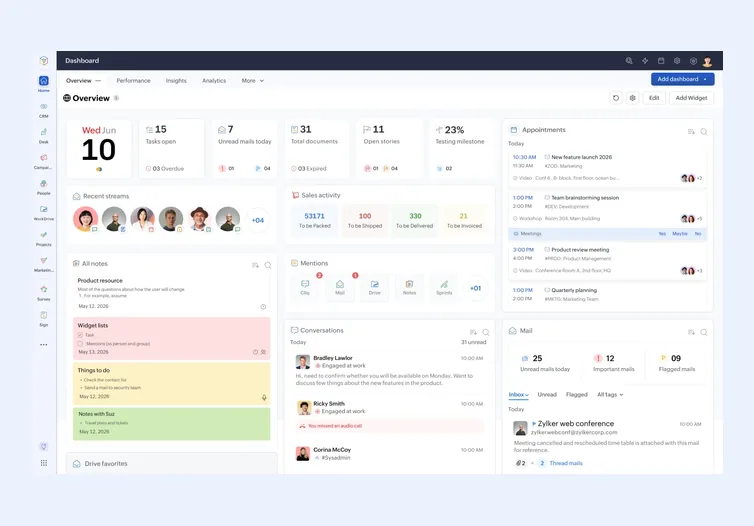
I work remotely with UK directors, finance leads and outsourced accountants to move that pack into Zoho Analytics. We start by agreeing what turnover, gross margin, debtor days and the other headline figures mean for your business and who owns each one. Only then do I connect the ledgers and build the views.
How Zoho fits a British business more broadly, including VAT and payroll, sits on my separate UK Zoho page. This one deals only with reporting, data access and the honest choice between Zoho Analytics and other tools, including the Power BI licenses many firms already hold.
 What I Do
UK projects usually begin with the board pack or the bank's information request, and grow into sales and marketing reporting once finance trusts the model.

Profit and loss by department, balance sheet highlights, cash position and forecast, with commentary fields, laid out the way your directors already read them so the switch does not require retraining the board.

Sage, Xero, QuickBooks or Zoho Books data brought in by connector or scheduled export, with nominal codes and tracking categories mapped to a single reporting structure that your accountant approves.

Aged debtors by customer and salesperson, promised payment dates and disputed invoices, so credit control and the invoice finance provider work from the same debtor book.

UK, Irish and other European entities reported together in sterling, with rates and revaluation choices documented by finance and intercompany balances excluded from the combined totals.

Google, LinkedIn and Meta campaigns linked to CRM inquiries, opportunities and invoiced turnover, so marketing reports what it costs to win a customer rather than a cost per click.

Workspaces and row-level permissions built around who may see salaries, margins and customer personal data, with notes your data protection lead can keep on file.
How I Work
What the board actually reads
 Current pack reviewed page by page
Definitions agreed with finance
Sources and owners listed
Personal data flagged
Current pack reviewed page by page
Definitions agreed with finance
Sources and owners listed
Personal data flagged
Ledgers mapped and reconciled
Nominal codes mapped once
Entities and currencies joined
CRM and campaigns linked
Totals checked to trial balance
Permissions set by role
First close on the new pack
Parallel run with old workbook
Directors review and sign off
Scheduled distribution set
Dictionary handed to finance
UK owner-managed businesses tend to share a recognizable reporting rhythm. Directors want monthly management accounts, the bank relationship manager asks for figures when a facility is reviewed, and companies using invoice finance send the provider regular debtor information. None of this follows a statutory template, which is why each business has its own spreadsheet version.
Typical content I move into Zoho Analytics:
Labels matter more than people expect. If your board says turnover, debtors and creditors, the dashboard should too, even when the source system says revenue and receivables. Every headline figure is agreed with your finance director or external accountant before it appears, and I run the new pack in parallel with the old workbook for a close so differences are explained, not discovered. Broader dashboard design questions are covered on my management dashboards page.
The source landscape in British companies is varied. Desktop Sage 50 remains common in established firms, cloud Sage and Xero in newer ones, and many have Zoho Books or Zoho CRM alongside. Retail and hospitality businesses add an EPOS system, and online sellers add Shopify or Amazon.
What I look at for each source:
Where data quality problems surface, such as customers set up twice or departments coded loosely, I list them and fix the cause in the source system where possible. That often overlaps with a wider ERP health check.
Many UK firms trade with Europe, and a fair number have set up an Irish or other EU entity to keep serving customers there. That produces a reporting question the individual ledgers do not answer: what does the group look like in sterling?
My approach in Zoho Analytics:
This is management reporting. Formal group consolidation for statutory accounts remains with your accountant and the ledger. If consolidation is becoming a monthly struggle, it may point to a broader system review, which my UK ERP consulting work covers.
British B2B firms often spend on LinkedIn and Google for inquiries, and consumer brands on Meta and Google Shopping. Each platform reports its own conversions, and the totals usually exceed the sales the business actually made.
The reporting chain I build connects spend to the inquiry recorded in the CRM, the inquiry to an opportunity, and the won opportunity to invoices in the ledger. For that to work, the CRM has to capture source and campaign reliably on every new contact, including inquiries that arrive by phone or email rather than through a web form. I usually spend more time on that discipline than on the dashboard itself.
Useful views once the chain holds:
When marketing and finance read the same figure, budget conversations get shorter. This sits alongside my paid marketing and B2B lead generation work.
A reporting tool tends to collect personal data quietly: customer contacts, employee salaries, individual sales performance. Under UK GDPR, the same principles apply there as in the source systems. I document which personal data enters Zoho Analytics, keep it out where an aggregate will do, and restrict salary and individual performance data to named roles. Ask Zoho which data center region your account uses and review its processing terms with your data protection lead; do not assume.
Zoho Analytics is a sensible choice when Zoho already runs much of the business and finance will maintain the reports. I would point you elsewhere when:
I am independent of Zoho and Microsoft, so the advice follows your situation. For the wider platform picture, see my Zoho consultant page for the UK and the UK overview.

Tell me about your business and current systems. I’ll suggest the most sensible first step.
Book a Consultation
Not sure which ERP you need?
Share your business requirements with me and I will help you understand the right process, architecture and platform before implementation.
FAQ
Often not through a direct live connector, because Sage 50 is commonly a desktop product. The usual routes are a scheduled export or a database connection, depending on your version and setup. Cloud ledgers such as Xero and Zoho Books are simpler to connect. I confirm the route during discovery so the refresh schedule is realistic before dashboards are designed around it.
It can replace most of the number gathering. Commentary, judgment on provisions and the finance director's narrative still come from people. I rebuild your existing pack in Zoho Analytics with the same structure and terms, run it in parallel with the workbook for a close, and agree any differences with finance before the board sees the new version.
By keeping personal data out of dashboards where aggregates are enough, restricting salary and individual performance views to named roles, and documenting what data flows in from each source. I also suggest confirming the hosting region and Zoho's processing terms with your data protection lead. Legal interpretation stays with your advisor; I design the system to follow it.
Yes. I work remotely and schedule live sessions inside the UK working day, which also suits groups with colleagues in Ireland or continental Europe. Recorded walkthroughs of models and dashboards let finance and sales review between sessions without extra meetings.
No. I am an independent Zoho Analytics consultant with no reseller arrangement. I am paid for analysis, data modeling and dashboard design, so I can recommend Power BI, a warehouse or simply better spreadsheets when that suits you better than Zoho Analytics.
Every business is different. Share where you are today and what you want to fix, and I’ll tell you honestly whether and how I can help.
Book a Consultation
Insights
 Book a Consultation
Book a consultation to talk through your processes, systems and goals. I’ll reply with practical next steps - no obligation.