
Contact Info

 Leeds
Leeds
Why would a Leeds business choose ERPNext?
A Leeds business might choose ERPNext when it wants an open-source ERP it can own, report on freely and extend with its own people. That can suit firms with in-house data skills, farm and rural suppliers on the city's edge, and contractors running fleets of machinery. As an independent ERPNext consultant, I test the fit, design a first phase and oversee delivery remotely.
Last reviewed by Vikas Saroj
Leeds has a large digital and data workforce, and plenty of mid-sized companies here employ analysts or developers of their own. For them, an ERP that keeps its data behind a closed reporting layer is frustrating. ERPNext, built on the open-source Frappe framework, is attractive partly because the data is theirs to query.
Openness is not the only reason to choose it, though, and it brings duties as well as freedom. I help you judge whether ERPNext fits your operations, plan reporting and upgrades sensibly, and oversee whoever builds it, working remotely as an independent consultant.
 What I Do
I work on fit, design and oversight. The build is done by your developers or an implementer, with my review.

I test ERPNext against your priority processes using scripted scenarios, and set out plainly where it is strong, where it needs configuration and where custom work or another product would be wiser.

I decide with your analysts which reports belong inside ERPNext, which data should flow to your warehouse or BI tool, and how access is granted without exposing more than each person needs.

For farm and rural suppliers, I design batches, price lists, seasonal payment terms, credit limits and delivery planning so the busy seasons do not overwhelm the office.

For contractors with machinery and vehicles, I specify asset records, servicing schedules, repair costs and depreciation so equipment decisions are based on real figures.

I set rules for custom apps, test environments and version upgrades, so changes made by your own developers do not block the next upgrade or break existing processes.

I write the brief an implementer or internal team works from, review their design choices and run acceptance tests with your staff before go-live.
How I Work
Prove the fit on your cases
 Map priority processes
Script real scenarios
Run them in a trial site
Record gaps and options
Map priority processes
Script real scenarios
Run them in a trial site
Record gaps and options
Design the first phase
Agree scope and modules
Set reporting and data rules
Define custom app policy
Plan migration and hosting
Oversee and hand over
Review the build
Test with your staff
Rehearse an upgrade
Document ownership
Leeds has built a sizable digital economy, with technology teams in financial services, health data, retail and media, plus a large number of software and analytics firms. One result is that ordinary mid-sized businesses in the city, such as distributors, contractors and manufacturers, often have someone on staff who can write a query, build a dashboard or maintain a small application.
Those businesses tend to ask a particular question when choosing an ERP: will we be able to use our own data? Many subscription systems restrict direct database access and expect reporting to run through their own tools or paid connectors. ERPNext, being open source on the Frappe framework, gives you the database, an API and the source code, whether you host it yourself or use a managed service.
That openness is a genuine advantage, but it is not a reason on its own to choose a system. ERPNext still has to fit how you sell, buy, stock and account, and you still need someone accountable for upgrades and support. UK-specific matters, including VAT and moving from Sage or Xero, are covered on my UK ERPNext page. Here I focus on the Leeds situations where ERPNext is worth a serious look.
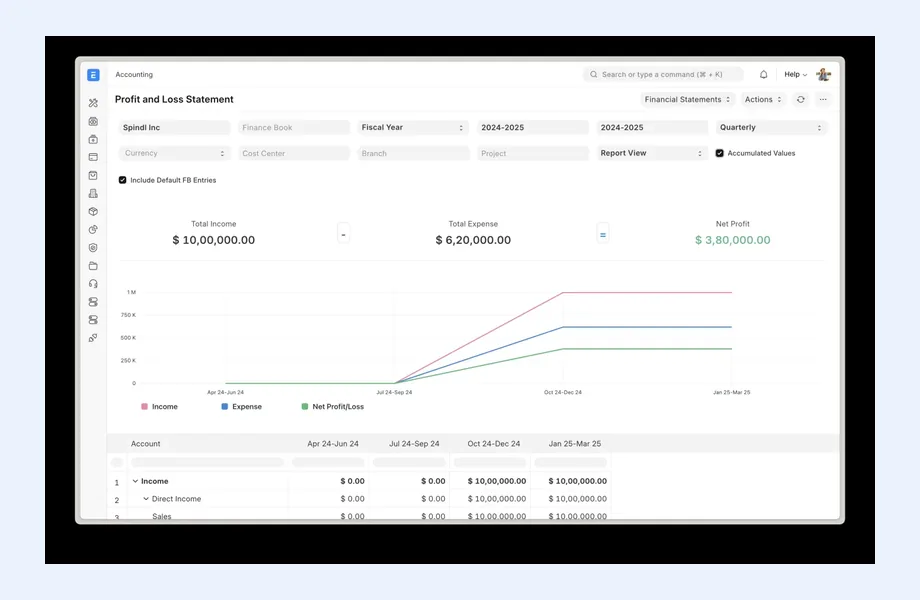
When a business has its own analysts, the reporting design becomes a joint exercise. Some reports belong inside ERPNext, where users see live figures with drill-down: aged debt, stock levels, open orders, project margins. Others belong in your data warehouse or BI tool, combined with web, marketing or operational data from other systems.
I help you draw that line and then design the flow. ERPNext offers built-in query and script reports, a REST API and the underlying database, and each route suits a different need. For regular extracts, a scheduled job or an API pull into your warehouse keeps the load away from the live system. For heavier analysis, a read-only copy of the database is safer than querying production directly. Either way, access should be granted by role and documented, because finance and payroll data deserves tighter control than stock levels.
I also look at data definitions. If the ERP and the warehouse calculate margin or revenue differently, directors will see two numbers and trust neither. We agree the definitions once and test them against the accounts. My management dashboards page explains how I approach board-level reporting, and system integration covers the data flows.
The Leeds district stretches well beyond the city into farmland around Wetherby and toward the Vale of York, and the businesses that serve agriculture there have their own rhythm. Feed, seed, fertilizer, fuel and farm supply merchants see sharp seasonal peaks, sell largely on account to farming customers, and deliver to yards and fields rather than shop counters.
ERPNext handles much of this with standard features. Batch tracking records the lot and expiry of feed and treated products. Price lists can vary by customer group and season. Payment terms templates allow seasonal arrangements, such as settlement after harvest, while credit limits keep exposure visible. Delivery trips group orders by route, and the driver's confirmation becomes the basis for invoicing. Bulk products sold by weight need careful unit setup so that what is ordered, delivered and invoiced matches.
Some products carry their own record-keeping and labeling duties, for example animal feed or plant protection products. Which rules apply is a question for your trade body or adviser; I make sure the system captures what they confirm. The wholesale ERP page covers account trading in more depth, and ERPNext Accounting explains how credit control and payment terms work.
Grounds maintenance, landscaping and similar contractors serve parks, housing estates, business parks and private grounds across Leeds and the wider region. Their profitability depends heavily on equipment: mowers, vehicles, trailers and specialist machinery that must be serviced, repaired and eventually replaced. Many run their fleet records in a spreadsheet separate from job costing.
ERPNext's Assets module can hold each machine and vehicle with its purchase cost, location, depreciation schedule and maintenance plan. Servicing tasks can be scheduled and assigned, and repair costs logged against the asset. On the contract side, projects and timesheets record crew hours by site, so each contract can be costed with labor, materials and an equipment charge rather than labor alone.
Seasonality is a real factor. Work peaks through the growing season and shifts to other tasks in winter, and temporary staff may join for the busy months. I design the setup so seasonal workers can record time simply, often on a phone, and so contract margins can be compared season by season. Depreciation policies and how equipment is treated for tax are for your accountant to set; the system follows their choices. The job costing page explains the costing model.
The freedom to change ERPNext is also its main risk. When internal developers add fields, scripts and custom apps without rules, each major upgrade becomes harder, and eventually the business stays on an old version because nobody wants to find out what breaks. Firms with capable in-house staff are, ironically, especially exposed to this.
I set simple rules at the start. Changes go into a custom app under version control rather than being edited directly in the live system. A test copy is refreshed regularly and every change is checked there first. Before each upgrade, a rehearsal is run against a copy of production with the key processes tested by the people who use them. Someone is named as owner of the system, whether an internal developer, a managed hosting provider or an implementer under a support agreement.
The first phase should be modest: core accounting, buying, selling and stock, plus the one area that justified ERPNext in the first place. I write that scope, review the build and run acceptance testing, all remotely, with a visit to Leeds by arrangement if a workshop would help. For the wider view, see the ERPNext platform page and my Leeds ERP consultant page.

Tell me about your business and current systems. I’ll suggest the most sensible first step.
Book a Consultation
Not sure which ERP you need?
Share your business requirements with me and I will help you understand the right process, architecture and platform before implementation.
FAQ
Yes, through built-in reports, the REST API or the database itself. For anything heavy or regular, I recommend a scheduled extract or a read-only copy rather than querying the live system. Access should be granted by role, with finance and payroll data restricted, and data definitions agreed so the warehouse and the ERP report the same numbers.
Yes. Payment terms templates can reflect seasonal arrangements, credit limits keep exposure visible, and price lists can vary by customer group and season. I design these with your credit controller so that sales staff cannot quietly extend terms, and so overdue seasonal balances are flagged in good time.
The Assets module can hold each machine with its maintenance schedule, assign servicing tasks and record repair costs. Combined with projects and timesheets, it lets you add an equipment charge to each contract's costs. Depreciation and tax treatment of equipment are for your accountant to decide.
Keep changes in a custom app under version control, test every change on a copy of the system first, and rehearse each upgrade against a copy of production before running it live. I set those rules at the start and name an owner for the system, so upgrades remain routine rather than risky.
No. I advise on hosting options and on who should own support, whether your own developers, a managed hosting provider or an implementer. I am independent of all of them, and my role is to make sure the arrangement is clear, documented and fits the skills you actually have.
Every business is different. Share where you are today and what you want to fix, and I’ll tell you honestly whether and how I can help.
Book a Consultation
Insights
 Book a Consultation
Book a consultation to talk through your processes, systems and goals. I’ll reply with practical next steps - no obligation.


