Contact Info

 Glasgow
Is Odoo a good fit for Glasgow distributors and wholesalers?
It can be, for the right distributor. Firms serving the Highlands and islands need delivery runs, ferry-dependent dates and carrier surcharges handled properly, while produce wholesalers supplying Glasgow's kitchens need daily prices, late-night orders and goods sold by weight. Odoo's sales, inventory and website apps cover much of this, with some gaps. As an independent consultant, I test the fit with your real orders and oversee delivery remotely.
Last reviewed by Vikas Saroj
Glasgow is the natural supply base for much of the west of Scotland. Wholesalers and distributors on the industrial estates around the city send vans and pallets up to Argyll, into the Highlands and across to the islands, where a delivery may depend on a ferry crossing and on a carrier's surcharge for the postcode. Those constraints belong in the system, not only in a dispatcher's head.
Closer to home, fruit, vegetable and food wholesalers around the city's wholesale market at Blochairn supply restaurants, hotels and kitchens across Glasgow, with prices that move daily and goods often sold by weight. I work remotely as an independent Odoo consultant for both kinds of distributor, testing Odoo against real orders before anyone commits to subscriptions or an implementation firm.
 What I Do
The design work is where these businesses differ from a standard Odoo demonstration, so that is where the care goes.

Customers grouped by area and delivery day, with order cut-offs that respect each run, so sales staff promise dates the warehouse can keep for Argyll, Ayrshire, the Highlands or the islands.

Shipping methods and price rules by postcode area, carrier choices for surcharge zones, and a clear routine for moving orders when a crossing is canceled or a carrier changes its service.

Order thresholds, delivery charges and stocking advice for island shops, hotels and contractors who order less often but in larger quantities, held in pricelists and customer settings instead of sales staff's memories.

Pricelists by customer group with day-to-day updates for market-driven lines, quick order entry from each customer's usual items, and quotes that make clear which prices hold for that day only.

A decision on selling by the box and invoicing by actual weight, lot and expiry tracking where your food safety plan needs it, and recording of waste and returnable crates so margins stay honest.

A clear view of which features need Odoo Enterprise, which community modules are worth their upgrade risk, and what to ask the implementation firm that will build and support the system.
How I Work
Check fit with your own orders
 Walk an island delivery through
Follow a late kitchen order
Price a market-driven line
List carriers and surcharges
Walk an island delivery through
Follow a late kitchen order
Price a market-driven line
List carriers and surcharges
Decide apps, edition and rules
Choose apps and edition
Define runs and shipping rules
Settle the catch weight approach
Agree data to migrate
Build, check and go live
Review the implementer's configuration
Test disruption and peak scenarios
Train dispatch and sales staff
Check the first busy month
Wholesalers and distributors in Glasgow and the towns around it supply a huge stretch of country: Argyll and Bute, Ayrshire, Lochaber, Skye and the Western Isles, as well as Clyde islands such as Arran, Bute and Cumbrae. Food and drink, building materials, catering supplies, electrical goods and hotel consumables all travel this way, often on the firm's own vans for nearer areas and through hauliers or parcel carriers further out.
The constraints are practical and familiar to anyone who has dispatched to the islands. Ferries run to timetables and can be disrupted by weather, so a delivery promised for a particular day may have to move. Many carriers treat Highland and island postcodes differently, with surcharges, longer transit times or limits on what they will take. Island customers, from village shops to hotels and contractors, tend to order less often and in larger quantities, and they expect clear terms on delivery charges.
When these rules live only in a dispatcher's knowledge, sales staff promise dates that cannot be kept and margins on remote deliveries leak away. Odoo can hold much of this logic, and the work is in designing it properly. The broader systems view for Glasgow businesses is on my Glasgow ERP consultant page, and the UK tax and migration points for Odoo are on the UK Odoo page.
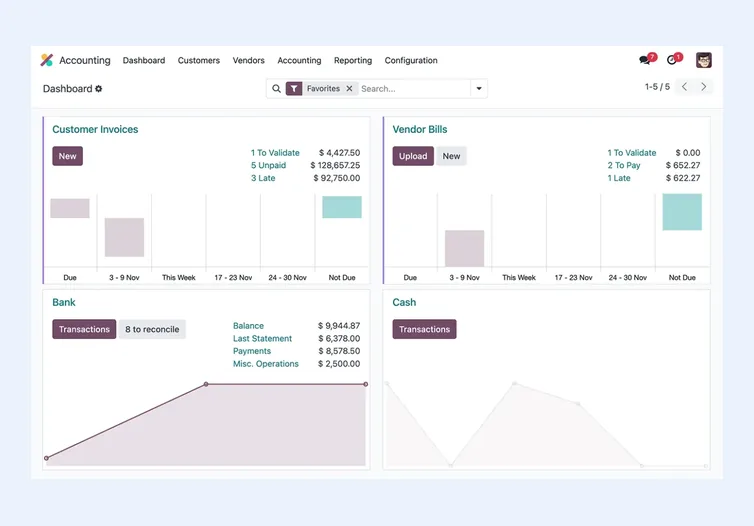
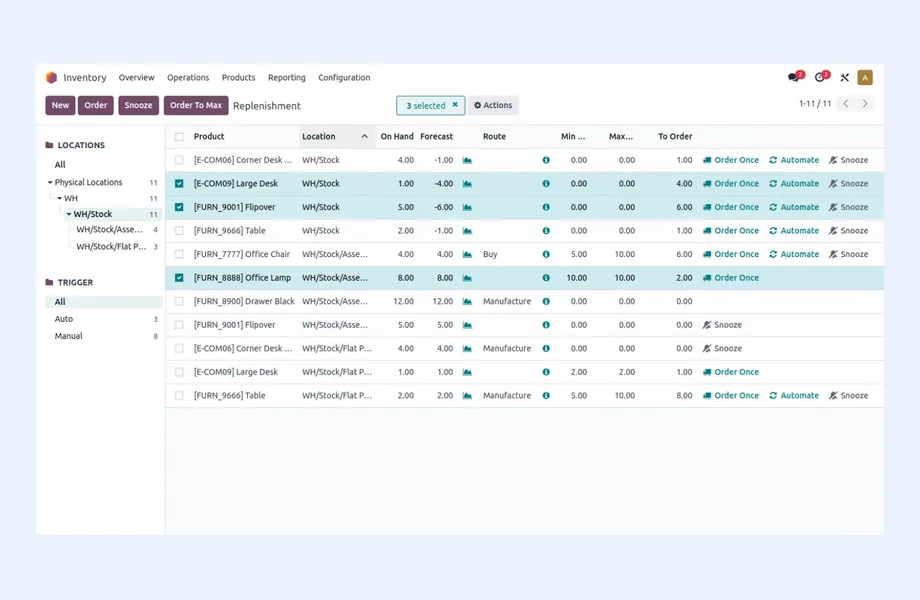
The design starts with customers assigned to delivery areas and days. In Odoo this can be handled through customer fields, delivery methods and routes, with each sales order picking up the next available run and an order cut-off that allows time to load the van and reach the ferry. Batch transfers group the picks for each run, so the warehouse works through one vehicle's load at a time rather than order by order.
Shipping methods carry the price rules: free delivery on a local run above a threshold you set, a charge for island postcodes, or a carrier rate where a parcel service is used. Odoo's delivery methods can be limited to particular countries, regions and postcode prefixes, which is how surcharge zones are kept apart from mainland ones. Carrier connectors exist for some services, depending on the carrier and the edition, and others need an export file or a separate shipping tool.
The part that is easy to skip is disruption. When a crossing is canceled, someone has to move a batch of orders to the next sailing, tell the customers and keep the stock reserved. I specify that as a deliberate routine with its own list view or report, so it becomes a repeatable step rather than a round of phone calls. The Odoo Inventory page explains the underlying stock and routing features.
Glasgow's restaurants, cafes, hotels and institutional kitchens are supplied by fruit, vegetable and food wholesalers clustered around the city's wholesale market at Blochairn and on the industrial estates nearby. Their working day starts in the small hours. Orders arrive late the previous evening by phone, message or web portal, vans load before dawn, and prices for many lines move with the market from day to day. Short items and substitutions are part of normal service.
Odoo can take orders through a customer portal or website, with prices drawn from each customer's own pricelist, while sales staff enter phoned orders quickly from a customer's usual list of items. Daily price changes can be handled by importing updated pricelists each morning or by rules based on product category, and quotations can state that prices apply to that day. Substitutions need a clear routine, so a replaced item shows correctly on the delivery note and invoice rather than being fixed by a credit note days later.
City delivery runs work like the longer routes, only faster: kitchens expect drops before service, often through a back lane or a loading bay with tight access. I design the cut-offs, run assignments and driver paperwork with your transport lead and test them against a busy Friday's orders. My food and beverage ERP page covers the wider industry questions.
Produce rarely sells in neat units. A case of salad leaves or a box of fish may be ordered by the box but invoiced by actual weight, and standard Odoo does not handle that pattern, often called catch weight, without careful design or an extension. I set out the options plainly: sell by weight with an estimated quantity on the order, record the actual weight at packing and adjust the order, or adopt a tested module, each with its own consequences for stock, pricing and invoicing.
Shelf life matters as much as weight. Lots and expiry dates can be tracked where traceability or food safety requires it, with picking set so the oldest suitable stock leaves first. Waste and markdowns need their own recording, so margin reports show what was thrown away rather than hiding it in stock adjustments. Which records your food safety plan requires is decided with your food safety advisor in line with guidance from Food Standards Scotland, and the system is configured to hold them.
Returnable crates, trays and pallets are the quiet cost in this trade. They can be tracked as deposit items on deliveries and collections, with a running balance for each customer, so drivers know what to pick up and finance knows what is outstanding. The inventory and warehousing solution covers related stock design questions.
For both kinds of distributor, the first decisions are which Odoo apps are needed now, which can wait, and whether Odoo Enterprise is required. Some carrier connectors, certain accounting features and some warehouse tools may depend on the edition, and community modules can fill gaps at the cost of upgrade risk. I set those choices out in writing with the reasons, so the decision does not rest on a sales demonstration.
An implementation firm normally builds and supports the system, and the right firm for an island distributor may not be the right one for a produce wholesaler. I help write the brief, compare proposals and then review the configuration against the agreed design, including the scenarios that matter to you: a canceled crossing, a run of busy Friday orders, a short delivery that needs a same-day credit. I resell no licenses and take no commission from Odoo or from implementers.
The work runs remotely through video sessions, shared documents and recorded walkthroughs, planned around your trading calendar so nobody is pulled away during the busiest weeks. A visit to your warehouse or shop in Glasgow can be arranged when seeing the operation in person would help. If you want the requirements documented on their own first, the Glasgow ERP business analyst page explains that service.

Tell me about your business and current systems. I’ll suggest the most sensible first step.
Book a Consultation
Not sure which ERP you need?
Share your business requirements with me and I will help you understand the right process, architecture and platform before implementation.
FAQ
Yes. Delivery methods can be restricted to particular countries, regions and postcode prefixes, so island and Highland surcharge zones can carry their own charges or carrier choices. The rules need to match what your hauliers and parcel carriers actually charge, so I collect those terms first and test the setup with real customer addresses.
Nothing automatic, unless the process is designed. I specify a routine for moving the affected orders to the next run, keeping their stock reserved and telling customers, with a simple list that shows which orders were booked on the canceled sailing. It turns a disruption into a repeatable step instead of a scramble.
Not in a standard setup without some design. The options are to sell by weight with an estimated quantity, to capture the actual weight at packing and adjust the order, or to add a tested module. Each affects stock, pricing and invoicing differently, so I test them with your real products before recommending one.
Pricelists can be grouped by customer type and updated by import each morning for market-driven lines, while stable lines keep fixed prices. Quotations and order confirmations can state that prices apply to that day. The update needs one owner and a fixed routine, so sales staff never quote the previous day's prices by mistake.
Yes. Plenty of businesses already have an implementation firm or a developer, and my role is to make sure their work matches your processes. I review designs and configuration against agreed scenarios, help prioritize change requests and run acceptance tests with your staff, while the implementer stays responsible for the build and support.
Every business is different. Share where you are today and what you want to fix, and I’ll tell you honestly whether and how I can help.
Book a Consultation
Insights
 Book a Consultation
Book a consultation to talk through your processes, systems and goals. I’ll reply with practical next steps - no obligation.