Contact Info

 ERPNext in Jordan
Who should consider ERPNext in Jordan?
ERPNext suits Jordanian companies with developers or a dependable technical provider who want open-source ERP, control over hosting and freedom to extend. An ERPNext consultant plans how invoices will reach the national e-invoicing system, usually through a custom or community app, sets dinar precision and dollar handling, and structures Jordanian and Gulf entities on one site. I advise independently, remotely and in English.
Last reviewed by Vikas Saroj
The Jordanian companies best placed to run ERPNext usually have something in common: people who can read and write code. That might be a software house using ERPNext for its own operations, a distributor with a small IT team, or a group that keeps a technical partner on retainer. With that capacity, ERPNext offers a complete ERP that can be shaped and hosted on your terms without per-user license fees.
Without the right governance, the same freedom creates a fragile system. I am an independent ERPNext consultant who works remotely in English with Jordanian teams. I write the business requirements, decide with you what is configuration and what is code, and review the developers' output before it reaches users.
 What I Do
These services give Jordanian ERPNext projects structure, so technical freedom produces a system the business can rely on.

If no maintained app exists for Jordan's national system, I specify one: document types, data mapping, authentication, error handling and who maintains it when the rules change.

Frappe Cloud or a server you manage, weighed on control, custom app support, backups, upgrade timing and the data protection advice you receive under Jordanian law.

Dinar precision and rounding set correctly, dollar rates loaded from an agreed source, override permissions defined, and the monthly exchange rate revaluation reviewed by finance before it posts.

Jordanian and Gulf companies on a shared ERPNext site, keeping separate currencies, charts and taxes, with inter-company invoices and group reports designed with your accountant.

Batches with expiry dates, quality inspections on receipt and a formal release before sale, set up for pharmaceutical, medical or food stock that must be traceable end to end.

Custom work kept in separate apps under version control, tested on a staging site, reviewed against written requirements and rehearsed through upgrades before reaching production.
How I Work
Requirements before any code
 Processes and tax cases
E-invoicing app scope
Hosting and backup plan
Configure or code decisions
Processes and tax cases
E-invoicing app scope
Hosting and backup plan
Configure or code decisions
Build with review points
Staging site and repository
App reviewed against specification
Test submissions with errors
Trial migrations reconciled
Live use with an owner
Cutover at period end
Submission monitoring routine
Upgrade rehearsal documented
Support owner named
Jordan's tax department runs a national electronic invoicing system that receives structured invoice data. ERPNext does not include a vendor-maintained connection for it in its standard product as far as I can establish, so Jordanian users rely on a community app, an implementer's integration or their own development. Any of these can work. What fails is treating the connection as a small add-on to be finished in the last week.
I scope it like any other deliverable:
Developers then build against that specification, and I review the result with test submissions before go-live. Your tax advisor confirms scope and timing. The ERP integration page explains how I document and test connections, and the global ERPNext consulting page gives broader context.
ERPNext can be hosted on Frappe Cloud, Frappe's managed service, or on infrastructure you run. Teams with developers can be tempted to self-host simply because they are able to. That instinct is worth testing rather than following.
Frappe Cloud takes care of servers, backups and routine upgrades, and supports custom apps within the limits of its platform. The trade-off is less control over timing and system-level tools, so check that your e-invoicing app and any integrations run there without workarounds. A server you manage, in Jordan, in the Gulf or further afield, gives complete control, but every patch, backup, restore test and security review becomes your team's job.
I help you decide by writing down what each option requires in practice: who monitors the server, who restores it at night, how upgrades are rehearsed and what happens when the developer who set it up leaves. Jordan has introduced data protection legislation, so the location of customer and employee data is part of the decision, and your legal counsel's view is recorded as a requirement. A sensible pattern is often Frappe Cloud for the first phase, with self-hosting revisited once the system and the team have matured and the support routine is proven.
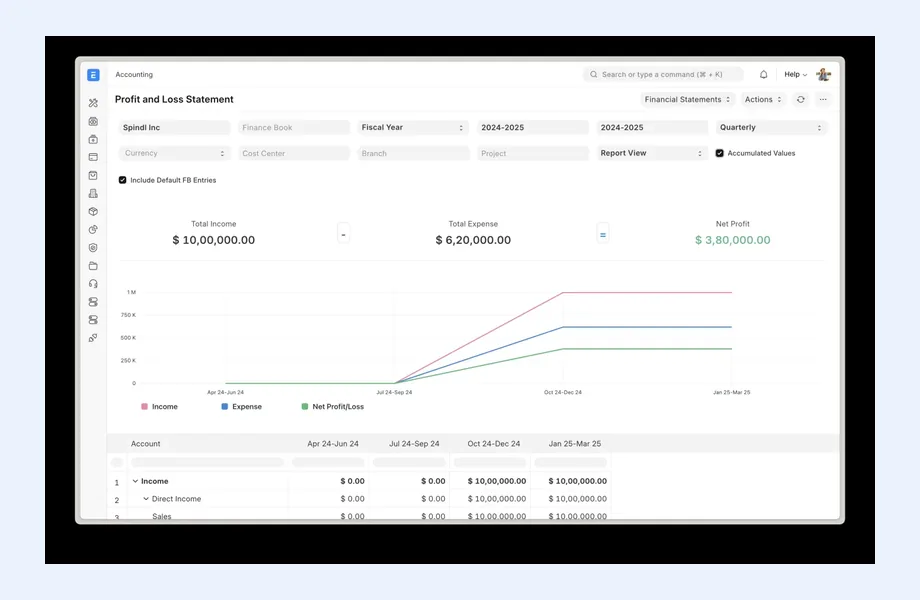
The Jordanian dinar divides into thousandths, so ERPNext's currency and number precision settings must be configured to match before live transactions start. If they are not, invoice totals, tax amounts and payments can disagree by small amounts that make reconciliation tedious. I include precision in the configuration checklist and in test cases.
Dollar transactions are common, whether from services billed abroad or goods bought from international suppliers. The rate source for each transaction type is settled with your accountant, along with how currency exchange records get loaded, which users can override a rate and how monthly exchange rate revaluation is reviewed before posting.
Regional groups are able to keep more than one company inside a single ERPNext site. A Jordanian company and a Gulf company can each keep their own default currency, ledger and tax templates, while sharing items, customers and suppliers where that makes sense. Inter-company sales and purchase invoices link the two sides of a recharge, and consolidated reports give management the group view. I design these flows with your finance team and test them with real recharge examples. ERPNext Accounting covers the finance features, and the Jordan ERP consultant page discusses regional offices across platforms.
Jordanian pharmaceutical, medical and food businesses using ERPNext need stock they can trace. ERPNext supports batches with manufacturing and expiry dates, quality inspections linked to receipts and deliveries, and warehouse structures that can separate quarantined stock from saleable stock. I design the receive, inspect, release and ship sequence with your quality team, then run a trace exercise before go-live: pick a batch and follow it to every customer and back to its supplier. Regulatory obligations themselves are confirmed by your regulatory staff.
Documents are the other local requirement. ERPNext has Arabic interface translations and right-to-left support, and print formats can be built for documents in Arabic or in both languages. My specification lists the language for every document and the fields that carry Arabic names. A bilingual colleague supplies the Arabic text, checks it on paper and runs training for Arabic-preferring users, while I keep all project documents in English. Print formats are stored in your custom app rather than edited on the live site, so they survive upgrades.
Moving data in from older accounting files and stock sheets is planned as in my ERP data migration service, and batch quantities must agree before sign-off.
ERPNext is a strong option for Jordanian companies that can own it. It is the wrong one when:
A software firm's instinct to build can also be a trap: every customization is something to maintain through upgrades, so I push back on code where configuration or a process change would do. An ERP evaluation compares ERPNext with the alternatives on your scenarios, and the Jordan hub sets out what a remote engagement with me looks like. Before recommending against ERPNext, I also check whether a modest support contract would close the gap, since that is sometimes all that is missing.

Tell me about your business and current systems. I’ll suggest the most sensible first step.
Book a Consultation
Not sure which ERP you need?
Share your business requirements with me and I will help you understand the right process, architecture and platform before implementation.
FAQ
Check the community and your implementer for current options, and look closely at who maintains any app you find. If nothing suitable exists, I write a specification your developers can build from, covering document types, data mapping, authentication and error handling. Applicability to your business is for your tax advisor to confirm.
Maybe, but ability is not the same as need. Self-hosting gives control and also gives your team every patch, backup and restore test. I compare it with Frappe Cloud against your real capacity, custom app needs and data protection advice, then recommend one with the reasoning written down.
Yes. A single site can run multiple companies, giving each one its own default currency, ledger structure and tax templates, with inter-company invoices linking recharges. Your accountant and I design the structure and the group reports together, and local advisors in every country sign off their part of the tax configuration.
No. I write requirements and specifications, decide with you what should be configuration and what should be code, and review what your developers or implementer deliver. Keeping design and development separate means someone is always checking that custom work is necessary and matches what the business asked for.
Every business is different. Share where you are today and what you want to fix, and I’ll tell you honestly whether and how I can help.
Book a Consultation
Insights
 Book a Consultation
Book a consultation to talk through your processes, systems and goals. I’ll reply with practical next steps - no obligation.