Contact Info

 Odoo Accounting in Iraq
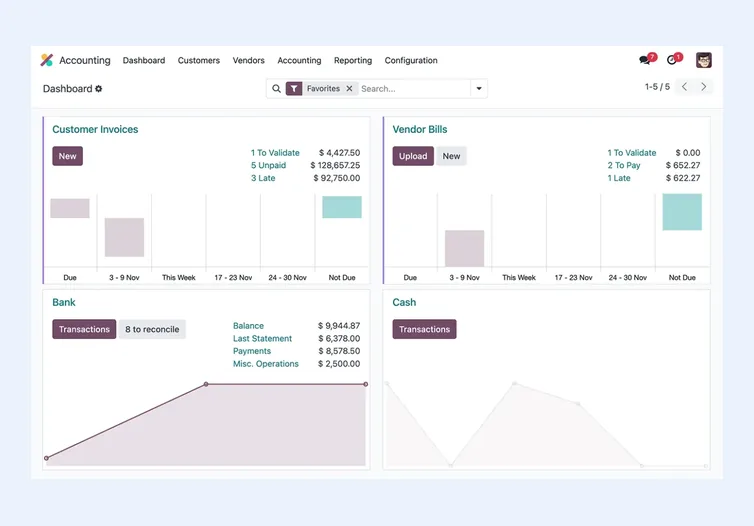
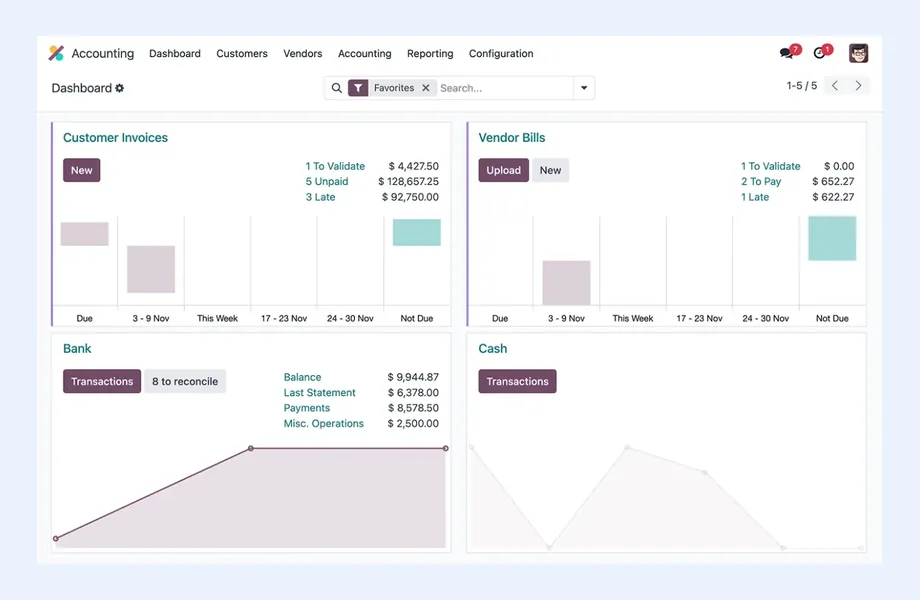
What does Odoo accounting setup involve for an Iraqi group?
For an Iraqi group, Odoo accounting setup means confirming whether an Iraq fiscal package exists for your version, having the implementer adapt the generic chart of accounts per company, configuring taxes only from advisor guidance, running dinar and dollar journals with clear rate rules, linking federal and Kurdistan Region companies through intercompany accounts, and hosting the database so it can be restored. I review and test this remotely as a freelance Odoo consultant.
Last reviewed by Vikas Saroj
Iraqi contractors, service companies and importers that adopt Odoo often focus first on projects, purchasing and stock. The accounting app then inherits whatever those modules post. If the chart, taxes and currency journals were set up in a hurry, finance spends every month-end correcting entries that the operational teams never see.
I work remotely with businesses in Iraq as a freelance Odoo consultant on the finance design: accounts, taxes, currencies, intercompany entries, close controls and the hosting that protects the books. Your implementer builds, your advisors decide tax treatment, and I make sure the two meet in a configuration that has been tested. The engagement runs in English, with Arabic or Kurdish layouts checked by your staff.
 What I Do
Each service protects the ledger that an Iraqi Odoo database depends on once projects, purchasing and stock start posting into it.

In a multi-company database each company keeps its own chart. I review how the implementer adapts the generic chart for federal and Kurdistan Region entities, keeping codes aligned so group reports map cleanly.

Your advisors set out which taxes and withholdings apply to each entity. I convert their written guidance into Odoo taxes, accounts and defaults and have them review posted test documents before go-live.

Bank and cash journals for each currency the company really holds, a rate owner and source, and tested handling of payments that settle dollar invoices in dinars or the reverse.

Due-to and due-from accounts, rules for recharges and equipment hire between companies, and a monthly matching routine, so intercompany balances agree before any group report is produced.

Lock dates after each review, a defined reconciliation order, restricted rights to reset posted entries and a change history partners can rely on when they question a figure.

Backups stored away from the live server, restore tests on a schedule, a staging copy for updates and a named owner for recovery, compared across the hosting options you are considering.
How I Work
Companies, advisors and currencies
 Charts compared per entity
Advisor guidance collected
Currency journals listed
Intercompany flows agreed
Charts compared per entity
Advisor guidance collected
Currency journals listed
Intercompany flows agreed
A month of transactions in staging
Taxes posted and reviewed
Cross-currency payments tested
Intercompany balances matched
Backup restored and timed
Live books under control
Opening balances per company
Lock dates applied
Reset rights restricted
Recovery owner confirmed
In a multi-company Odoo database, each company carries its own chart of accounts, journals and taxes. For a group with a federal Iraq company and a Kurdistan Region company, that suits separate registrations well, but it also means the chart is adapted more than once. Unless both follow the same structure, group reports turn into a mapping exercise every month.
Where no Iraq fiscal package is available in your version, which you should check in that version rather than assume, the implementer builds from the generic chart of Odoo Accounting. I agree a common skeleton with the accountants of each entity:
Each company's accountant signs a mapping from the old chart to the new one, which then drives the opening balance loads. Analytic accounts for contracts and sites sit alongside the chart rather than inside it; their design is covered on the Odoo in Iraq page, so this page stays with the ledger.
Tax treatment in Iraq can differ by business type, by entity and by region, and I do not interpret it. What I do is turn your advisors' written guidance into Odoo configuration that behaves predictably. I ask them for a list of transaction types per entity, the taxes or withholdings that apply, how each should appear on documents and the accounts involved.
Odoo models these as taxes with their own accounts and, where useful, tax groups for presentation. An amount a client withholds from a payment, for example, can be handled through a tax on the invoice or at the payment stage, depending on what your advisor wants the books to show. Each approach affects receivables and reports differently, so when the choice is unclear I build both in staging and let the advisor compare the output.
Fiscal positions then adjust taxes automatically for particular partners, such as clients abroad or exempt bodies your advisor identifies. I test every scenario by posting realistic documents and checking the accounts, the partner balance and any tax report lines your advisor uses. When guidance changes, the same scenario list shows quickly what needs updating. The ERP testing and UAT page explains how these scenarios become acceptance tests.
Iraqi companies often hold both currencies in the bank and in cash. In Odoo I set up a separate journal for each currency actually held, so each statement reconciles against its own balance. The company currency is decided with the accountant, rates are loaded per date by a named person or a configured rate service, and a written rule says which rate applies when invoice and payment dates differ.
The cases I always test:
Exchange differences post through a dedicated journal to accounts your accountant approves, and I check that the partner balance reaches zero when the invoice is fully settled.
Between the group's companies, intercompany accounts carry recharges, equipment hire and loans. In editions that include inter-company rules, Odoo can create the matching document in the receiving company; otherwise both sides are entered under a shared reference. A monthly matching of these balances comes before any consolidated report, whether that report is produced in Odoo or in a separate layer. The multi-currency ERP page outlines the broader design.
For accounting, Enterprise carries the full Accounting app with reconciliation tools and financial reports. Community provides invoicing and core postings, and groups that keep their full books on it typically add community-maintained modules. If your scope depends on several of them, I list each one, its maintainer and how it survives upgrades, then compare that effort with an Enterprise subscription.
Whichever edition you run, close controls protect what has been reviewed. I configure lock dates after each month-end sign-off, restrict who can reset posted entries, and use the change history so a partner's question about a figure can be answered from the system.
Hosting resilience is the other half of protecting the books. For Iraqi groups I put the same questions to every hosting option:
A database that cannot be restored is a bigger finance risk than any missing feature. The Iraq ERP consultant page compares platforms more broadly, and the Iraq hub covers the market context.

Tell me about your business and current systems. I’ll suggest the most sensible first step.
Book a Consultation
Not sure which ERP you need?
Share your business requirements with me and I will help you understand the right process, architecture and platform before implementation.
FAQ
Check the packages shipped with the exact version and edition you plan to use. If none fits, the implementer adapts the generic chart of accounts for each company and builds taxes from your advisors' guidance. I review that work and test each transaction type before any live entry is posted.
That depends on what your advisor wants the books to show. It can be modeled as a tax on the invoice or handled at payment, and each affects receivables differently. I build the options in staging, your advisor reviews the output, and the chosen method is documented for the finance team.
Yes. Each company keeps its own chart, journals, taxes and users within the database. I align the charts so group reports map cleanly, set up intercompany accounts and agree a monthly matching routine with the accountants of both companies.
Ask where backups are stored, when a restore was last tested, whether a staging copy exists for updates and who restores service after an outage. I put those questions to every option and record the answers before live data is loaded, so the decision rests on evidence.
Every business is different. Share where you are today and what you want to fix, and I’ll tell you honestly whether and how I can help.
Book a Consultation
Insights
 Book a Consultation
Book a consultation to talk through your processes, systems and goals. I’ll reply with practical next steps - no obligation.