Contact Info

 Zoho Inventory in Denmark
Can a Danish brand run its stock in Zoho Inventory?
A Danish brand or wholesaler can run its stock in Zoho Inventory when it sells finished goods through a webshop, retailers and perhaps marketplaces in Denmark and neighboring countries, from its own warehouse or a fulfillment partner. Inventory handles items, orders, batches and shipping; invoices, VAT and the bookkeeping that Danish rules govern stay in Zoho Books, e-conomic or another ledger. I assess and design this remotely, independent of Zoho.
Last reviewed by Vikas Saroj
Danish design, lifestyle, food and beverage brands often reach well beyond Denmark early, selling online to Germany, Sweden and Norway, wholesaling to shops across Europe and sometimes opening a showroom or pop-up store. Each channel keeps its own idea of what is in stock, and the person who reconciles them every Monday becomes a bottleneck.
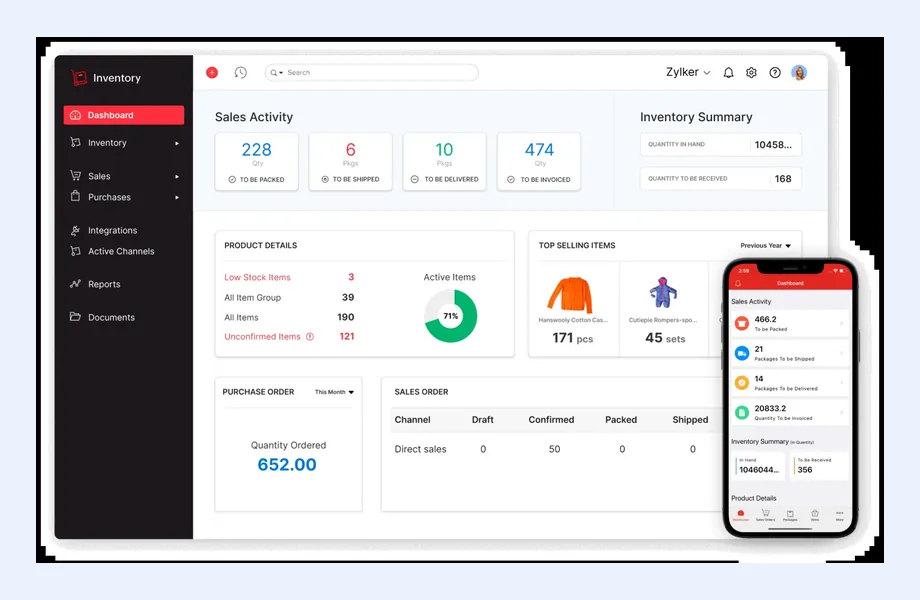
Zoho Inventory can hold one stock figure for all of them, if items, warehouses and channels are set up with care. I work remotely with Danish companies to decide whether Inventory is the right tool, design the structure and agree how it hands data to the accounting system that Danish bookkeeping rules apply to. Sessions are held in English, and Danish product texts come from native speakers on your team.
 What I Do
Most of the effort goes into structure and boundaries, settled before a single item is imported.

A map of every place you sell, from the Danish webshop and foreign storefronts to retailers, marketplaces and a showroom, showing how orders arrive and where stock must be reserved.

Item groups, variants for color and size, bundles and gift sets, seasonal collections and discontinued lines, set up so buyers, warehouse staff and the webshop describe products the same way.

The order and confirmation exchange with a third-party warehouse, including which system owns stock levels, how damaged or missing goods are reported and how counts are reconciled.

Batch numbers and best-before dates for food, drink, cosmetics and supplements, with first-expiry-first-out picking and a way to trace any batch to the customers who received it.

A returns flow for consumers and retailers across several countries, with inspection, restock or write-off decisions and a reason code that feeds product and supplier reports.

A specified link between Inventory and Zoho Books, e-conomic or your ERP, covering sales documents, supplier bills, stock valuation and whatever period-end figures your accountant reviews.
How I Work
Channels, locations and products
 List channels and order routes
Review the fulfillment setup
Sample the product catalog
Confirm accounting responsibilities
List channels and order routes
Review the fulfillment setup
Sample the product catalog
Confirm accounting responsibilities
Structure first, then connections
Load a clean item master
Set warehouses and reservations
Connect webshop and partners
Define returns statuses
Counted stock and live channels
Count and load opening stock
Run real orders in parallel
Train buyers and warehouse staff
Reconcile value with the bookkeeper
A Danish product company rarely sells only in Denmark. A typical pattern combines a Danish webshop, storefronts or language versions for Germany, Sweden and Norway, wholesale orders from retailers across Europe, perhaps a marketplace, and a showroom or outlet. Each of these has different timing: retailers order a season ahead, consumers expect next-day delivery, and marketplaces penalize cancellations.
Zoho Inventory can serve as the stock master across these channels, but the design has to answer some questions first:
Connectors for storefronts and marketplaces exist, yet the set offered to a Danish account is not fixed, so I verify today's options and run real orders through them. Where a direct integration is missing, a connector can fill the gap, with the trade-off of one more system to monitor. For the product itself, read Zoho Inventory consulting; for the Danish suite decision, read Zoho consultant Denmark.
Danish online brands often use a third-party fulfillment partner rather than running their own warehouse. That moves the physical work out of the business, but not the responsibility for accurate stock. The integration between Zoho Inventory and the partner's warehouse system is where most errors appear, so I specify it carefully:
Carriers commonly used from Denmark include PostNord, GLS, DAO and Bring, with parcel shop delivery common for consumers. Zoho Inventory's direct carrier integrations vary by region, so where your carrier is not supported a shipping platform or the fulfillment partner prints labels and returns tracking.
Returns deserve their own process. Consumers across the EU generally have a right to withdraw from online purchases, and retailers may return unsold or faulty goods under your trading terms. Those rules are for your legal advisor. In Inventory, each returned item gets a cause code, a condition check and an outcome: back to stock, sent for repair or written off. Customer conversations about deliveries and returns can sit in a linked help desk; see Zoho Desk in Denmark.
Danish food, beverage and personal care sellers, from coffee roasters and breweries to organic food brands and skincare companies, cannot treat traceability as an extra. For them, tracking batches and dates is not optional. A recall, a customer complaint or an inspection can require you to prove where every lot ended up.
In Zoho Inventory I set up:
Which labeling, traceability and organic certification requirements apply to your products is for your quality lead or food safety advisor to confirm. I configure the data fields their answer calls for. If you blend, roast, brew or pack products yourself, Zoho Inventory's assembly features may cover simple cases, but recipe management and production planning point toward an ERP. For daily self-check routines in production or kitchens, see Zoho Creator in Denmark. Related industry context is on food and beverage ERP.
Zoho Inventory does not keep the books. Sales invoices, supplier bills, VAT and the ledger itself belong to Zoho Books when the two are paired, or in e-conomic, Dinero or an ERP through an integration. For a Danish company that boundary matters twice over: digital bookkeeping requirements apply to the accounting system, and cross-border sales bring VAT questions that your accountant must settle.
Points I clarify with your accountant before design:
If Zoho Books holds the ledger, Inventory and Books share items and documents natively; whether Books suits your Danish bookkeeping obligations is covered on Zoho Books in Denmark. If e-conomic or an ERP holds it, I specify the integration field by field and set up a monthly stock value reconciliation. Inventory's job is accurate quantities, costs and customer details; tax treatment stays with the accounting system and your accountant. Integration approaches are covered on system integration in Denmark.
Zoho Inventory fits trading and brand businesses with moderate complexity well. I recommend looking elsewhere when the requirements point beyond it:
Business Central, which grew out of the Danish-developed Navision, is worth comparing in these situations; see Business Central in Denmark. Odoo is another option, covered on Odoo consultant Denmark. A neutral selection process is outlined on ERP consultant Denmark, and the Denmark hub gives market background. I have no ties to any vendor, so the recommendation follows your requirements. Every session is remote, on video within Danish working hours.

Tell me about your business and current systems. I’ll suggest the most sensible first step.
Book a Consultation
Not sure which ERP you need?
Share your business requirements with me and I will help you understand the right process, architecture and platform before implementation.
FAQ
A Shopify connector is among Zoho Inventory's integrations, though the connector list differs by region. I check what a Danish account can use and test it with real orders, including bundles, cancellations, partial shipments and returns, before your team relies on it.
Yes, through an integration or file exchange with the partner's warehouse system. The critical decisions are which system owns stock levels, how shipping confirmations return and how differences are reconciled. I specify that exchange and agree it with the partner before go-live.
Yes. An integration carries sales, purchases and the stock valuation at each period end from Zoho Inventory into e-conomic, and e-conomic keeps the ledger, VAT and the bookkeeping obligations your accountant oversees. I define the fields, who numbers invoices and a monthly stock reconciliation.
VAT reporting, including any one-stop shop filings for consumer sales to other EU countries, belongs in the accounting system and with your accountant. Inventory supplies order data such as customer country, items and prices, so the accounting system can apply the treatment your accountant sets.
Every business is different. Share where you are today and what you want to fix, and I’ll tell you honestly whether and how I can help.
Book a Consultation
Insights
 Book a Consultation
Book a consultation to talk through your processes, systems and goals. I’ll reply with practical next steps - no obligation.