Contact Info

 Canada
How does a SaaS ERP consultant help Canadian software companies?
I help Canadian software companies design a finance stack where the CRM, a subscription billing platform and the ledger agree on every customer, whether that customer is in Ontario, Quebec or the United States. That covers GST, HST and QST decisions in system terms, US dollar revenue on Canadian books, French-language documents and deferred revenue data. Tax and accounting policy stay with your advisors.
Last reviewed by Vikas Saroj
I work remotely with Canadian software companies, many of which earn much of their revenue from customers in the United States while keeping their books in Canadian dollars. The usual starting point is QuickBooks or Xero, a CRM, a payment processor and a billing tool, held together by a controller who reconciles them every month.
Canadian SaaS teams face a combination that few other markets share: layered federal and provincial sales taxes at home, possible US state sales tax obligations next door, US dollar receipts, and customers in Quebec who expect French. I turn those requirements into a clear design before you select or replace any system.
 What I Do
Canadian SaaS founders and controllers often contact me when US growth outpaces the finance stack, a Quebec customer asks for French invoices, or month end depends on one person's spreadsheet.

Using your advisor's conclusions, I specify how the billing system decides GST, HST, QST or provincial tax for each Canadian customer, and how exempt or zero-rated foreign customers are identified and documented.

I design how US customers are priced, invoiced and collected in US dollars, where US tax decisions are made, and how receipts and exchange differences are recorded in Canadian books.

Requirements for French and English invoices, statements, dunning messages and customer portal text, with the language preference stored on the account rather than chosen by hand.

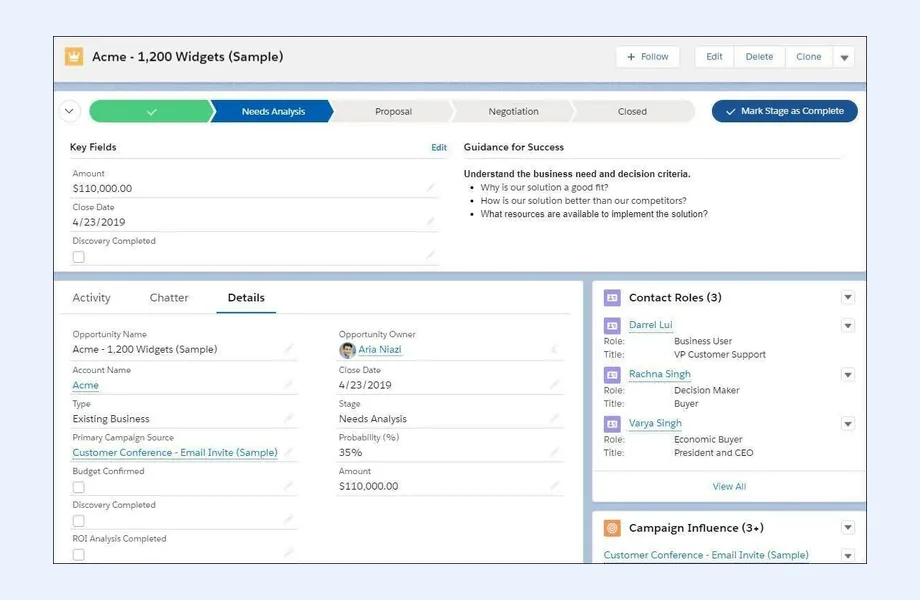
I define how a closed opportunity creates the subscription, how amendments flow back to the CRM, and which system is the master for customers, products and price books.

I compare ledgers, ERPs and subscription billing platforms with test cases drawn from your contracts, including a Quebec customer, a US customer and a mid-term plan change.

I coordinate the implementer, reconcile migrated subscriptions and deferred balances, and support the first billing cycle and sales tax filing on the new setup.
What to Measure
An ERP for saas should make these numbers available without a spreadsheet. I design the data model and reports around them from the start.
Platform Fit
How I Work
Customers, currencies and taxes
 Revenue split by country
Provincial tax cases listed
Language needs recorded
Current reconciliations reviewed
Revenue split by country
Provincial tax cases listed
Language needs recorded
Current reconciliations reviewed
Design, ownership and shortlist
System of record decided
Tax and currency rules written
Vendors tested on real cases
Recommendation with tradeoffs
Migrate, test and first filing
Subscriptions and balances moved
Bilingual templates tested
Exchange postings checked
First filing supported
A Canadian SaaS company usually has to decide sales tax customer by customer. GST or HST depends on where the customer is located, Quebec has its own QST administered separately, and some provinces with a separate provincial sales tax may also tax software or digital services. Foreign customers are often treated differently again. Non-resident suppliers selling digital services to Canadian consumers also face registration rules, which matters if you have an entity outside Canada. Your tax advisor determines the obligations for your products.
For the systems, that translates into requirements I write down and test:
If invoices come from a billing platform and adjustments from the ledger, tax can be calculated twice under different logic. I design it so there is one source of tax calculation. The broader Canadian tax picture in ERP projects is covered on my ERP consultant in Canada page.
For many Canadian software companies, the United States is the larger market. That creates two sets of design decisions. The first is currency: prices set in US dollars, receipts into a USD bank account, Canadian dollar reporting, and exchange gains and losses that must be posted consistently. Recurring revenue metrics also need a clear rule on which rate is used, or growth will appear to rise and fall with the exchange rate.
The second is tax. US states take different positions on taxing software subscriptions, and collection duties can arise from sales volume without any physical presence there. Your advisors decide whether and where you must register. The billing system then needs to calculate US tax for US customers while applying Canadian rules to Canadian ones, ideally through one tax calculation service rather than two separate setups.
Some companies also open a US subsidiary to contract with American customers. That adds intercompany charges set by your advisors and a need for consolidated reporting. I map which entity contracts with which customer, how the CRM records it, and how the ledger consolidates it, using the same quote-to-cash structure described on my ERP for SaaS page.
Quebec's French-language rules can affect contracts, invoices, customer communications and even software interfaces. Your legal counsel interprets what applies to your business. In system terms, the impact is concrete: invoice templates, statements, dunning emails, customer portal pages and renewal notices may all need French versions, chosen automatically from the customer's preference.
I check this early because it often decides between platforms. Some billing tools support translated templates and messages well; others require workarounds that break whenever a template changes. The requirements I write include:
The same applies to marketing. If you sell into Quebec, French content and correct language targeting matter for acquisition too, and my SaaS SEO work can measure that content against paid subscriptions recorded in the billing system.
Canadian software companies that claim research and development tax credits need engineering time and costs recorded by project in a form their advisors can use. I do not prepare claims, but I check that time tracking, payroll data and project codes exist in a usable shape, because adding them after the year has closed is much harder.
Revenue data deserves the same early attention. Whether you report under ASPE or IFRS, your accountants decide the revenue policy. I make sure contract dates, line-level schedules, onboarding fees and amendments are captured so deferred revenue can be produced from the system and traced to signed contracts. Investors and lenders will ask for recurring revenue and retention figures that tie to invoices.
All delivery is remote. Canadian teams often span several time zones, so I book live sessions in hours your head office and finance leads share, and record walkthroughs for developers and customer success staff elsewhere. Integration design is covered by my ERP integration service, and the CRM side by CRM consulting. For more on working with Canadian businesses, visit the Canada hub.

Tell me about your business and current systems. I’ll suggest the most sensible first step.
Book a Consultation
Not sure which ERP you need?
Share your business requirements with me and I will help you understand the right process, architecture and platform before implementation.
FAQ
Not necessarily. The tax depends on where the customer is, whether Quebec or provincial sales tax applies, and whether the customer is outside Canada. Your tax advisor should confirm the treatment for your products. I design the billing system so customer location, registration details and product tax codes produce that treatment automatically.
Decide which currency each customer is billed in, where USD receipts are banked, how exchange differences are posted and which rate is used for recurring revenue metrics. Then apply those rules in both the billing platform and the ledger. I document them so finance, sales and investors all see the same numbers.
Quebec's French-language rules may affect invoices and customer communications, and your counsel should confirm what applies to you. In practice, many SaaS companies prepare French versions of invoices, statements and dunning messages. I make sure the platform you choose can send each customer the right language automatically.
Yes. All delivery is remote, through online workshops, shared process maps and recorded walkthroughs, scheduled in hours your head office shares. That suits distributed software teams across provinces. If meeting in person would clearly add something, we can discuss a visit by arrangement.
Every business is different. Share where you are today and what you want to fix, and I’ll tell you honestly whether and how I can help.
Book a Consultation
Insights
 Book a Consultation
Book a consultation to talk through your processes, systems and goals. I’ll reply with practical next steps - no obligation.