Contact Info

 QuickBooks Migration
When should you migrate from QuickBooks to an ERP?
ERP migration from QuickBooks makes sense when the business has outgrown an accounting package: inventory, purchasing, projects or several companies are being run in spreadsheets and add-on apps around it. The migration itself means mapping the chart of accounts, classes and items to the new ERP, moving open invoices and bills, setting opening balances and deciding how much history to keep. I help you decide whether to move, where to and how.
Last reviewed by Vikas Saroj
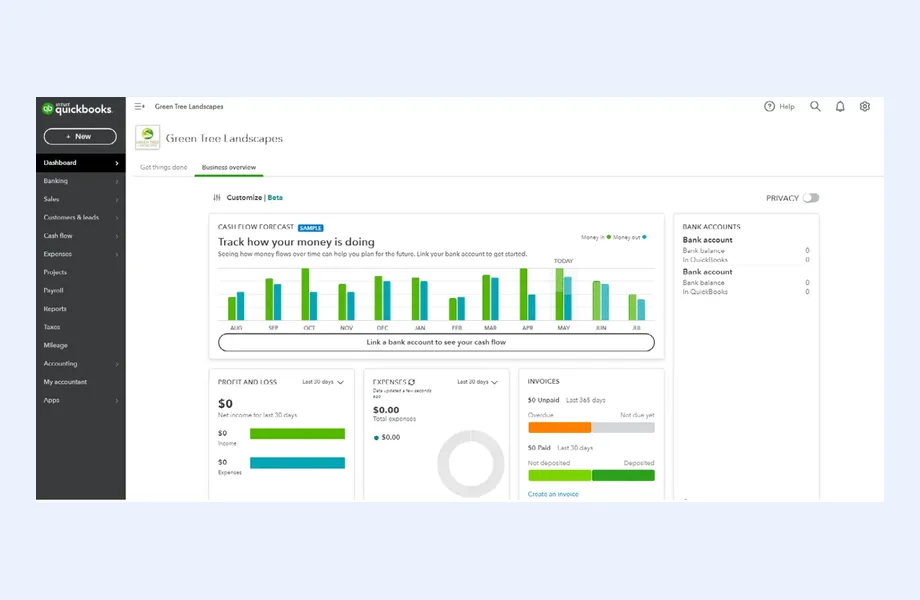
QuickBooks is a sensible choice for a young business. It handles invoicing, bills, bank reconciliation and basic reporting well. The trouble starts when the company grows around it: stock is tracked in a spreadsheet, purchasing happens by email, projects are costed in another tool and several apps are connected to fill the gaps.
At that point the question is not just which ERP to buy. It is which processes need a proper system, how the QuickBooks data maps into it, and whether a fuller accounting product would be enough. Sometimes the honest answer is to stay on QuickBooks and fix the processes around it.
I give that advice as an independent consultant. I do not resell any software, so the recommendation follows your business needs rather than a vendor relationship, and the same consultant who helps you decide can also guide the migration itself.
 What I Fix
These are the areas where a QuickBooks migration usually needs the most care.

An honest assessment of whether you have truly outgrown QuickBooks, or whether better processes, configuration or a few integrations would solve the problem at lower risk.

Using the move to clean up an account list that has grown over years, and deciding which detail belongs in accounts and which in ERP dimensions such as department or project.

Translating how QuickBooks classes, locations, customers and jobs have been used for reporting into the target ERP's dimensions, cost centers or projects, without losing comparability.

Rebuilding the item list with proper units, categories, warehouses and costing methods, since many QuickBooks item lists grew organically and were never designed for real stock control or valuation.

Listing every app connected to QuickBooks, such as payroll, payments, eCommerce or expenses, and deciding which the ERP replaces and which need a new integration.

Planning how open invoices, unpaid bills, sales tax balances and bank positions move across, and reconciling the new ERP to QuickBooks at the cutover date.
How It Runs
Confirm the move is justified
 Map processes around QuickBooks
List add-ons and spreadsheets
Define requirements
Shortlist target platforms
Map processes around QuickBooks
List add-ons and spreadsheets
Define requirements
Shortlist target platforms
Translate QuickBooks into the ERP
Chart of accounts redesign
Classes to dimensions mapping
Item and customer cleanup
History and archive decision
Load, reconcile and switch
Trial loads and reconciliation
Opening balance sign-off
Integration replacement
Cutover and parallel checks
Most businesses do not decide to leave QuickBooks in one moment. The pressure builds through symptoms like these:
These symptoms do not automatically mean an ERP. They mean the business is running core processes outside its system of record, and that needs an honest decision.
Before recommending a move, I check what is really driving the pain:
If the causes are mostly process and data, I will say so. If they are structural, the findings become the basis for requirements and a shortlist. Either way, the decision rests on evidence rather than frustration.
There are several realistic paths away from the pain, not all of them a full ERP:
Industry is a major factor. Trading, distribution and eCommerce businesses usually leave QuickBooks because of inventory. Manufacturing needs bills of materials and production costing. Professional services firms often move for project accounting and resource planning.
QuickBooks data is usually well structured, but years of flexible use create specific migration issues:
The detailed loading method, including trial runs and reconciliation, is part of my ERP data migration service. This page is about recognizing the problem and choosing the path.
I do not publish figures because the effort depends on factors specific to your business. The main cost drivers:
The timeline runs in phases. Assessment comes first: mapping processes around QuickBooks and confirming that a move is justified. Selection follows, with requirements and a shortlist. Then design, including the new chart of accounts, dimensions and item structure. Data preparation and trial loads run alongside configuration, with reconciliation after each trial. Cutover is usually timed to a period end, with QuickBooks closed for new entries and kept available read-only for reference.
The best starting point is an honest assessment. I review how your business runs around QuickBooks today: which processes sit in spreadsheets, which apps are connected and what leadership cannot see. You get a clear recommendation, which may be to stay and improve, move to a broader accounting suite, or move to an ERP, along with the reasons.
If a move is right, I help you define requirements, compare platforms neutrally through ERP evaluation, and plan the migration so finance can close the books with confidence in the new system. The trading case study describes a business that replaced spreadsheets and an aging accounting package with ERPNext.
For background, read how to choose an ERP and the ERP migration checklist. Then book a call to talk it through. You work directly with Vikas, and the first conversation is about your business, not about a product.

Tell me about your business and current systems. I’ll suggest the most sensible first step.
Book a Consultation
Not sure which ERP you need?
Share your business requirements with me and I will help you understand the right process, architecture and platform before implementation.
FAQ
Look at what happens outside it. If inventory, purchasing, projects or consolidation are managed in spreadsheets or a growing set of connected apps, and leadership cannot get operational reporting without manual work, you are running the business around your accounting system. That is the clearest sign a broader system is worth evaluating.
It is technically possible but rarely worth it. Most businesses migrate master data, open invoices and bills, and opening balances, sometimes with monthly summarized history for comparison reports. The full detailed history stays available in QuickBooks or an export archive for reference and audit purposes.
There is no single answer. Zoho Books suits many smaller businesses wanting a broader suite, Odoo and ERPNext suit companies needing inventory, purchasing or manufacturing in one system, and Business Central suits firms needing stronger controls. The right choice depends on your processes, industry, budget model and in-house skills.
Keep it accessible in read-only mode for a period so finance and auditors can look up historical detail, but stop all new entries at cutover. Running both systems in parallel for live transactions creates double work and reconciliation problems. A short parallel check of balances after go-live is enough.
Ideally at a financial period end, often the start of a new financial year, because opening balances are cleaner and comparisons are easier. A month end can also work well. Avoid switching during peak trading or immediately before an audit, when the finance team has the least time to spare.
Every business is different. Share where you are today and what you want to fix, and I’ll tell you honestly whether and how I can help.
Book a Consultation
Insights
 Book a Consultation
Book a consultation to talk through your processes, systems and goals. I’ll reply with practical next steps - no obligation.