Contact Info

 Jeddah
What does an ERP business analyst do for Jeddah companies?
An ERP business analyst documents how a Jeddah business really works so a system can be chosen and configured to match. Here that often means unusual trades: forwarders and customs brokers billing disbursements per shipment, jewelers pricing by weight and purity, fabric and perfume wholesalers converting units and variants. I gather requirements remotely from multilingual teams and link each one to real documents vendors must test against.
Last reviewed by Vikas Saroj
Some of the hardest ERP requirements in Jeddah come from businesses that standard software treats as unusual. A customs broker pays duties on a client's behalf and bills them back. A jeweler prices by weight and purity rather than by item. A fabric wholesaler buys by the roll and sells by the meter, while a perfume house blends, decants and sells in several sizes.
As a remote ERP business analyst, I document how these trades actually work, using your own documents and transactions as evidence, and turn that into requirements that vendors must prove against. The aim is a specification that reflects your trade, not a generic template.

 What I Do
The analysis starts from the unusual parts of your business, because those are the requirements a vendor demo is most likely to skip.

For forwarders, customs brokers and shipping agents, I define how each shipment becomes a job with its own costs, disbursements paid for clients, rebilled charges and profit, linked to the documents that move with the cargo.

For gold and jewelry traders, I document pricing by weight and purity, making charges, stones, buy-back of old gold and daily rate changes, and flag the tax treatment questions for your advisor to settle.

For fabric, abaya and perfume wholesalers, I map how items are bought, stored and sold in different units, colors, sizes and pack formats, and how conversions and leftover pieces should be recorded.

I capture processes from warehouse and workshop staff of many nationalities using visual swimlane maps, photos and short recorded walkthroughs, with a supervisor or colleague checking that everyone's input was understood correctly.
I collect real samples of your bills of lading, delivery orders, gold sale receipts or cutting slips and link each requirement to the document it comes from, so vendors test against reality.
I turn the unusual cases into acceptance scenarios: a part-shipped container, a returned roll, a gold buy-back netted against a sale, so the chosen system is tested where it is most likely to fail.
My Consulting Journey
Business first, technology second. You can hire me for one step - a BRD, a gap analysis, a vendor shortlist - or for the whole journey.
How I Work
See how the trade really works
 Walk through recorded floor videos
Collect real document samples
Interview counter and warehouse staff
List unusual cases and exceptions
Walk through recorded floor videos
Collect real document samples
Interview counter and warehouse staff
List unusual cases and exceptions
Write requirements vendors can test
Draw swimlane process maps
Write numbered requirements
Link each to its evidence
Mark advisor questions separately
Check vendors against your cases
Script trade-specific scenarios
Score vendor demonstrations
Record gaps and workarounds
Agree the final sign-off
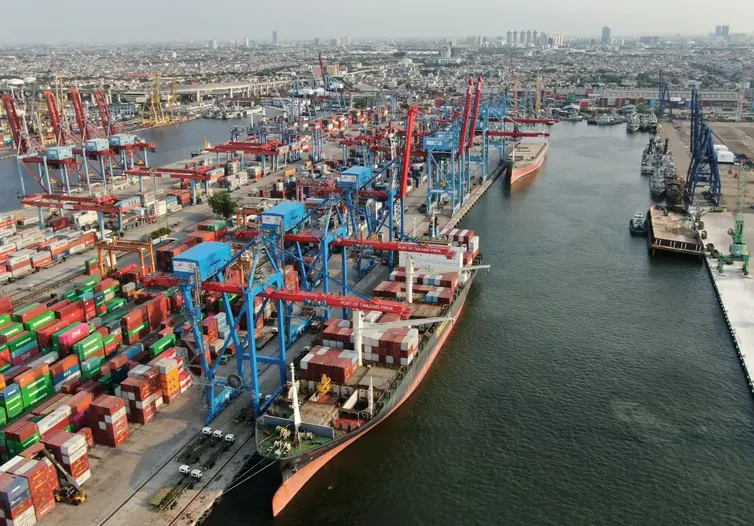
Jeddah's Red Sea port supports a whole layer of service companies: freight forwarders, customs brokers, shipping agents, transport contractors and warehouse operators. Their business is not buying and selling goods, so a standard trading ERP fits them poorly.
For these firms, the unit of work is the shipment or job. Each job collects revenue from the client and costs from carriers, the port, transporters and government fees. Some of those costs are disbursements paid on the client's behalf and passed through, while others are the firm's own expenses. Profit has to be calculated per job, and unbilled costs must not be forgotten when a file closes.
I document the job lifecycle from quotation through booking, clearance, delivery and final invoice, with the documents that drive each step. Requirements cover how disbursements are recorded and rebilled, how deposits and advances from clients are handled, how a job is closed and how management sees margin by client, trade lane and service type. Some firms are better served by a dedicated forwarding system linked to an accounting platform. The analysis makes that choice visible early. My logistics industry page covers the wider process.
The gold and jewelry shops of Jeddah's older markets and malls run on pricing logic that ordinary retail software does not expect. An item's price depends on its weight, its purity, the day's metal rate and a making charge, with stones and other components priced separately. Customers may trade in old gold against a new purchase, and stock is often counted by weight as well as by piece.
As a business analyst, I document each of these rules with the people who apply them at the counter and in the back office. Requirements cover how the daily rate is entered and approved, how each piece is tagged with weight, purity and cost, how buy-back is valued and recorded, how scrap and melting are tracked and how stock is reconciled by weight.
Tax treatment of precious metals can differ depending on the type of transaction and the parties involved. I do not decide that treatment. I mark each related requirement for confirmation by your tax advisor, so the configuration follows professional advice rather than assumption. Specialist jewelry software exists alongside general ERP platforms, and the requirements make it easier to compare both fairly through an ERP evaluation.
Jeddah's textile and perfume trades have their own logic. A fabric wholesaler buys rolls by weight or length, sells by the meter to tailors and abaya makers, and ends up with short leftover pieces that are sold cheaply or written off. Abaya producers manage styles in many sizes and colors, often with embroidery or finishing done by outside workshops. Perfume and oud houses buy oils in bulk, blend or decant them and sell the result in bottles of different sizes, sometimes as gift sets.
These businesses need careful requirements for units of measure and conversions, variants and how they are created, partial quantities, simple blending or repacking steps and how cost flows from bulk purchase to finished product. Without that detail, stock figures in the new system drift from reality within weeks of go-live.
I map each flow with the staff who cut, blend or pack, and I write requirements that cover the awkward cases: a roll returned half used, a blend made in a different quantity from the recipe, a gift set broken up for single sales. Those cases go straight into the test scenarios. My wholesale industry page sets out the core wholesale process.
Warehouses, workshops and shop floors in Jeddah are staffed by people from many countries. The same team might include colleagues more comfortable in Arabic, Urdu, Bengali, Tagalog or English. The people who know a process best are often the ones least comfortable in a long workshop held in a language that is not their own.
The engagement runs in English, so I adapt how requirements are gathered. I rely on visual swimlane maps that show who does what with arrows and document images rather than dense text. Supervisors record short phone videos of a task being done, which I review and turn into draft maps. I keep questions short and concrete, such as what happens when a delivery arrives without paperwork.
Before anything is finalized, a supervisor or bilingual colleague goes through the map with the staff who do the work, in whatever language suits them, and confirms or corrects it. Wherever process text must appear in Arabic or another language, a fluent colleague of the staff concerned drafts or proofs it. This keeps requirements faithful to how work really happens. The approach builds on my ERP process mapping service.
A requirement such as handling partial shipments is easy to agree and easy to misunderstand. In a Jeddah trading or logistics business, the clearest way to remove ambiguity is to link it to the actual paperwork: a bill of lading with several containers, a delivery order released in stages, a cutting slip from the fabric counter or a gold sale receipt showing weight and making charge.
I build an evidence pack of real, anonymized documents from your business. Each requirement in the specification points to the document or transaction that illustrates it. Vendors then demonstrate their system using the same examples, and gaps show up before a contract is signed rather than during testing.
The pack also helps later. Testers use it for acceptance scripts, trainers use it to build exercises, and new staff see what the system is expected to do with the documents they handle daily. National requirements such as e-invoicing are handled on the Saudi Arabia ERP business analyst page. City context is on the Jeddah ERP consultant page, and if you want independent help through selection, the Jeddah freelance ERP consultant page explains how.

Tell me about your business and current systems. I’ll suggest the most sensible first step.
Book a Consultation
Not sure which ERP you need?
Share your business requirements with me and I will help you understand the right process, architecture and platform before implementation.
FAQ
It depends on how much of your work is operational. Shipment tracking, documents and carrier bookings are usually stronger in a dedicated forwarding system, while accounting, payroll and management reporting suit an ERP. Many firms combine the two. The requirements I write show which functions matter most, so you can judge both options on the same basis.
Some general ERP platforms can be configured for it and specialist jewelry systems are built around it. The deciding factors are daily rate handling, piece tagging, buy-back and reconciliation by weight. I document those rules first, then test shortlisted systems against your own sales and buy-back examples, with tax points confirmed by your advisor.
They should cover the purchase unit, the selling unit and how conversion is recorded, how partial rolls and leftover pieces are tracked, how returns of partly used rolls are handled and how cost is calculated for each meter sold. I also include test scenarios for each of these so stock accuracy is proven before go-live.
I use visual process maps, short phone videos recorded by supervisors and simple, concrete questions. A supervisor or bilingual colleague then reviews the maps with staff in whichever language suits them and confirms or corrects them, so the final requirements reflect how the work is really done.
Every business is different. Share where you are today and what you want to fix, and I’ll tell you honestly whether and how I can help.
Book a Consultation
Insights
 Book a Consultation
Book a consultation to talk through your processes, systems and goals. I’ll reply with practical next steps - no obligation.