Contact Info

 Saudi Arabia
Why would a Saudi logistics company hire an independent ERP consultant?
Saudi forwarders, customs brokers and 3PLs often run branches at Red Sea and Gulf ports and inland, with land freight crossing GCC borders. I help them design how shipment jobs, brokerage fees, duties paid for clients, agent balances and warehouse charges reach finance, where ZATCA-compliant invoices are produced, and which platform fits, then support implementation remotely.
Last reviewed by Vikas Saroj
I work remotely with logistics service providers in Saudi Arabia: freight forwarders with desks at the Red Sea and Gulf ports, licensed customs brokers clearing cargo for importers, and contract logistics operators running warehouses near the major cities. Many operate as one company with several branches, each with its own operations team but a shared finance function in Riyadh, Jeddah or Dammam.
Three things shape the ERP design here. Branch jobs must roll up cleanly to one set of books. Invoices must meet ZATCA e-invoicing requirements, including for charges that simply pass a client's costs through. And land freight to neighboring Gulf countries produces costs that rarely match the quote. I map all three before discussing platforms.
 What I Do
Most Saudi logistics finance teams I meet are reconciling branches, not running a business view. The design aims to change that.

I document how each port and inland branch quotes, opens jobs, buys services and invoices, then agree what must be standard across branches and what may legitimately differ.

Clearance fees, additional item lines, inspection attendance, document preparation and storage follow-up captured from the brokerage desk so every chargeable action appears on the client invoice.

Duties, port and terminal charges and shipping line fees paid for clients tracked per job as recoverable amounts, with credit limits that include them and a clear presentation on the invoice.

I check how each shortlisted ERP generates, signs where required and reports tax invoices and credit notes under ZATCA rules, including disbursement lines and invoices issued from branch systems.

Trucks hired from subcontractors for routes into the wider Gulf costed per trip, with expected cost accrued at billing and border waiting, detention and permit charges added as they occur.

I compare options on scripted Saudi jobs, review implementer proposals, write acceptance tests in English with Arabic document checks and stay involved until the first close.
What to Measure
An ERP for logistics should make these numbers available without a spreadsheet. I design the data model and reports around them from the start.
Platform Fit
How I Work
Branches, services and compliance
 Port and inland branch review
Brokerage desk walkthrough
Current invoicing route
Agent and subcontractor terms
Port and inland branch review
Brokerage desk walkthrough
Current invoicing route
Agent and subcontractor terms
Rules the branches share
Common charge code list
Accrual and recovery rules
E-invoicing requirements
Freight system boundary
Branch by branch rollout
Pilot branch go-live
E-invoice test cycle
Open job migration
Remaining branches onboarded
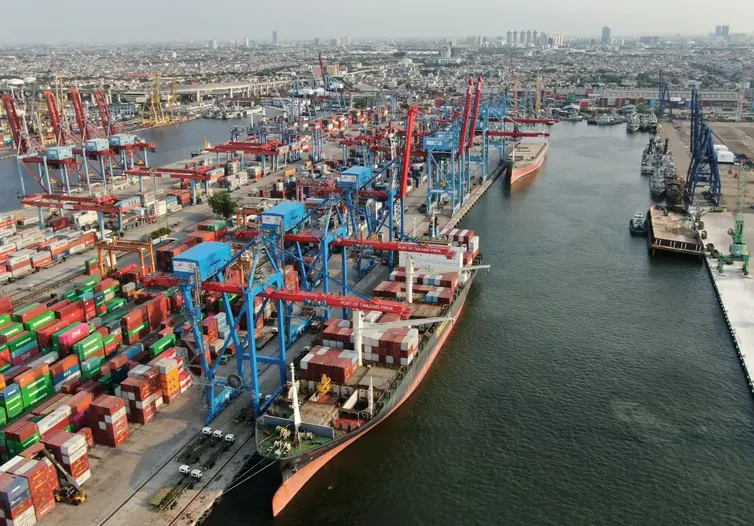
A Saudi forwarder's map often looks like this: a branch at Jeddah handling Red Sea cargo, another on the Gulf coast near Dammam, an operation linked to the dry port serving Riyadh, and perhaps desks at the main airports. Each branch clears, delivers and invoices its own jobs, yet many shipments involve two branches, for example arriving at one coast and being delivered inland by another team.
When each branch keeps its own spreadsheet or its own copy of a local accounting package, head office sees totals but cannot trust job margin. Inter-branch work is charged inconsistently or not at all, and the same client may receive invoices in different formats from different cities.
The design work covers:
I gather these through business analysis sessions with each branch manager, recorded so finance can review them later. The Saudi trading ERP page covers the importer's side of the same port flow.
Customs declarations in the Kingdom are lodged through the national trade and customs platforms, usually by licensed brokers using their own systems or the portals directly. That work needs specialists and should stay where it is. Trying to rebuild declaration logic inside an ERP adds cost and risk for little benefit.
What the ERP does need from the brokerage desk is every event that has a financial consequence: the clearance fee, the number of items declared, inspection attendance, extra document work, duties and fees paid on the client's behalf and any storage or demurrage incurred while cargo waits. If these are captured as structured data, the invoice is complete. If they are written in a notebook or an email, some of them are never billed.
I define that boundary in a short interface specification: what the brokerage side sends, in what form, how often and who fixes errors. Where the brokerage system has no integration options, a simple daily import with validation may be enough. I also cover how a cleared job is closed, because open jobs with stray costs are a common source of month-end surprises. The detail goes into the integration design and is tested with a real clearance during UAT.
Logistics invoices can be awkward under e-invoicing because they mix the provider's own services with costs paid on the client's behalf. A typical import invoice may include freight, clearance fees, delivery, and reimbursement of duty and port charges. How each of those lines is treated for VAT, and whether a reimbursement is presented as a disbursement, is a question for your tax advisor. How the ERP produces the e-invoice correctly once the treatment is decided is a system design question I can help with.
The points I test with each shortlisted platform include whether tax invoices and simplified invoices are generated in the required format, how credit notes link to the original invoice when a job is re-billed, how invoices raised by branches or by a connected freight system reach the authority where integration applies, and how Arabic and English content appears together on the document.
I ask vendors to demonstrate these steps on your scenarios rather than describe them. Requirements and timelines from ZATCA are confirmed with your advisor and the vendor; I keep a record of each vendor's stated approach in the selection file. There is more on this for one platform at Odoo in Saudi Arabia.
Road freight links Saudi Arabia with the UAE, Kuwait, Bahrain, Qatar, Oman and Jordan, and many Saudi forwarders sell full and part loads on those routes using subcontracted trucks. Quoting is straightforward. Costing is not, because the real cost of a trip includes waiting at border crossings, detention when consignees are not ready, permits, escorts for certain cargo and occasional rerouting.
If only the haulier's base invoice is recorded against the job, margin looks healthy until the extra charges arrive weeks later and are booked to general expenses. I design trip-level costing that accrues the agreed truck rate when the client is invoiced, then lets operations add border and detention charges against the same job as soon as drivers report them, with a flag for those that can be recharged under the client contract.
Payments to truck owners and small transport companies also need attention: advances to drivers, settlement after delivery and deductions for damage or delays. These are accounts payable processes, but they must be linked to trips. If you operate your own trucks as well, ERP for transportation covers fleet costing in more depth.
Saudi logistics companies often run an operational freight or brokerage system alongside an older local accounting package, with branches sending spreadsheets to head office. Larger groups may have outgrown that model as they add contract warehousing or regional subsidiaries. The decision is usually whether to keep the operational system and modernize finance behind it, or move to an ERP with freight extensions.
I run vendor selection with a scripted Saudi set: an import through Jeddah delivered to Riyadh by another branch, a brokerage-only job with an inspection, a truck to Dubai with border waiting charges, a warehouse billing cycle and an e-invoice with a credit note. The same scripts become UAT cases later.
Engagements are remote. Managers join live workshops scheduled across the Saudi working days, port staff on rotating shifts watch short recorded walkthroughs, and an on-site day at a port branch is possible by arrangement when it adds something. The Saudi ERP consultant page explains engagement options, the Saudi Arabia hub has notes on the Saudi market, while the general job model is set out in the logistics ERP overview. For storage-led operations, see warehousing ERP.

Tell me about your business and current systems. I’ll suggest the most sensible first step.
Book a Consultation
Not sure which ERP you need?
Share your business requirements with me and I will help you understand the right process, architecture and platform before implementation.
FAQ
No. Declarations belong in the systems built to connect with Saudi customs platforms, operated by your licensed brokers. The ERP should receive every financial event from the brokerage desk, such as fees, inspections and amounts paid for clients, so invoicing and job margin are complete. I define that interface and test it with real clearances.
First your tax advisor decides how each type of charge is treated, including whether it qualifies as a disbursement. Then the ERP must produce the e-invoice in the required format with those lines presented correctly, and link any credit note to the original. I test that whole cycle with each shortlisted platform on your real invoices.
Accrue the agreed truck cost when you invoice the client, then let operations add border waiting, detention and permit costs to the same job as soon as they are known. Flag those that can be recharged. Reviewing margin per trip after final settlement, not at invoicing, shows which routes and clients really pay.
Yes. I run remote workshops with each branch manager, use recorded screen walkthroughs of how jobs are handled today and keep a shared decision log for head office. Branch teams review designs in their own time. If a visit to a port operation genuinely adds value, it can be arranged, but most of the work does not need one.
Every business is different. Share where you are today and what you want to fix, and I’ll tell you honestly whether and how I can help.
Book a Consultation
Insights
 Book a Consultation
Book a consultation to talk through your processes, systems and goals. I’ll reply with practical next steps - no obligation.