Contact Info
 Qatar
Qatar
How does a distribution ERP consultant help a Qatari FMCG distributor?
For a Qatari FMCG distributor, a distribution ERP consultant designs how dense Doha routes, pre-sell orders, van deliveries, food service accounts and principal reporting run in one system. I document each channel, specify what the handheld and the ERP must do, test shortlisted platforms on a scripted route day and oversee the rollout remotely, with no commercial tie to any vendor.
Last reviewed by Vikas Saroj
Qatar is a compact market. Most of the outlets a distributor serves sit within a short drive of the main warehouse, so a salesman can make many calls in a day and the same grocery may be visited more than once a week. That density changes how vans, orders and stock should be planned, and it is where I usually begin with Qatari distributors.
I work remotely with companies that distribute food, beverages, personal care and household products for international principals, selling to supermarkets, small groceries, hotels, caterers and institutions. Before any platform is discussed, I map the channels you actually run and the reports each principal expects from you.
 What I Do
Each channel a Qatari distributor serves has different ordering, pricing and delivery habits. I make those differences explicit before any software is configured.

I help you decide where pure van selling still makes sense and where an order taker followed by a delivery van works better, then write the stock, invoicing and settlement rules for each model.

With outlets close together, journey plans can be tight. I define outlet classes, call frequencies and minimum order rules so the system can flag uneconomic drops instead of leaving that judgment to memory.

Hotels, caterers and institutional kitchens buy on agreed price lists, often with delivery windows and product specifications. I capture those contract terms so orders are priced and scheduled correctly every time.

Some brand owners send their own distributor management tool or a fixed upload template. I document each feed, map item and outlet codes, and plan how the ERP will supply it automatically.

For chilled and frozen ranges I set requirements for batch and expiry capture, first-expiry picking, temperature-related write-offs and how short-dated stock is offered or returned to the principal.

I score ERP and field sales apps against your own scenarios, review implementer proposals for gaps and stay involved through testing, so the choice is grounded in your scenarios rather than a polished demo.
What to Measure
An ERP for distribution should make these numbers available without a spreadsheet. I design the data model and reports around them from the start.
Platform Fit
How I Work
Channels, routes and principals
 Channel and outlet census
Current order capture flow
Principal reporting obligations
Evening reconciliation walkthrough
Channel and outlet census
Current order capture flow
Principal reporting obligations
Evening reconciliation walkthrough
Rules the system must follow
Sales model per channel
Contract price list design
Batch and expiry rules
Scripted route day scenarios
Test, pilot and extend
Vendor run of scenarios
Pilot with selected salesmen
Settlement testing with cashiers
Channel by channel rollout
In larger countries a van may leave for a full day on a long route. In Qatar the picture is different. Outlets cluster around Doha and the surrounding towns, drive times between calls are short, and small groceries often prefer frequent small deliveries because their storage space is limited. That favors a high call frequency, and it raises a real design question: should the salesman carry the stock, or should he take the order and let a delivery van follow?
Both models exist in Qatari distribution, sometimes inside the same company. Van selling suits impulse lines and outlets that pay cash. Pre-sell suits larger stores, wider ranges and customers on credit, because the warehouse can pick accurately and the delivery driver only hands over goods and documents. Each model needs different rules in the ERP:
I map your current routes, then agree with sales and finance which model each channel should follow. That decision shapes the handheld app, the picking process and the settlement design, so it comes before any vendor demo. The general route-to-cash cycle is described on my distribution ERP page.
Food service is often a significant channel for Qatari distributors of food and beverage brands. Hotels, restaurants, contract caterers and institutional kitchens behave nothing like a grocery on a van route. They buy against an agreed price list for a period, specify pack sizes and sometimes particular brands, expect deliveries within a receiving window and frequently ask for supporting documents such as batch details or product specifications.
When a distributor runs food service through the same price logic as retail outlets, two problems follow. Contract prices get overridden by hand, and nobody can tell whether a large account is profitable once delivery cost and credit terms are considered.
My requirements for this channel cover contract price lists with validity periods, agreed substitutions when a line is out of stock, delivery slot booking, batch and expiry printed on the delivery note, and separate credit terms from the trade channel. I also look at how purchase orders arrive from larger hotel groups, since some send them by email in a fixed layout and others through a supplier portal, and decide whether those orders should be keyed in, imported or connected through ERP integration.
Chilled and frozen ranges add cold chain discipline: picking by earliest expiry, recording why stock was written off and keeping short-dated stock visible early enough to clear it.
International principals rarely leave reporting to the distributor's discretion. Some provide their own distributor management system and expect primary and secondary sales to flow into it. Others send a spreadsheet template or an upload specification and ask for it on a fixed cycle. A distributor carrying several brands may be feeding three or four different formats, each with its own outlet classification and item codes.
That work is usually where hidden effort sits. I document every principal's requirement in a single register and turn it into design decisions:
Once those are in the ERP design, the reports become a by-product of daily transactions rather than a monthly rebuild. If you also import directly and hold agency rights, my trading ERP page for Qatar covers shipment costing and agency structure, which I deliberately leave out here.
Qatar, as I understand it, is not charging a general VAT at present, which makes a van invoice there simpler than one printed across the Saudi border. Have your tax advisor confirm where things stand before the design is signed off, because this is precisely the sort of fact that can shift.
Even so, I give each invoice and bill line a tax field, currently set to a nil rate. Doing that at setup is cheap. If rules change, or if you sell to customers in other GCC countries, the ledger and the handheld can adapt without reworking every price list and document template. I ask each vendor how quickly their handheld app could add tax lines if that were ever needed.
Documents still need care. Delivery notes, invoices and customer statements in Qatar usually carry Arabic alongside English, and item names on a small handheld printout must remain readable in both scripts. Credit control matters as well: trade customers may pay in cash, on short credit or with post-dated checks, and the handheld should block a sale to an outlet that finance has put on hold.
The migration work I see most often is from a desktop accounting package plus a separate field app that exports a file each evening. Outlet masters, open balances, checks in hand and stock by vehicle are the items that have to be correct when the new system opens.
The choice between platforms in distribution rarely turns on accounting features. It turns on how the field app and the ERP behave together on an ordinary day. I script that day from your own business: a pre-sell order picked overnight, a van sale to a cash outlet with a damaged goods return, a hotel order against a contract price list, a delivery with batch details printed, and a principal upload produced from the results. Each shortlisted vendor runs it on screen with your team scoring.
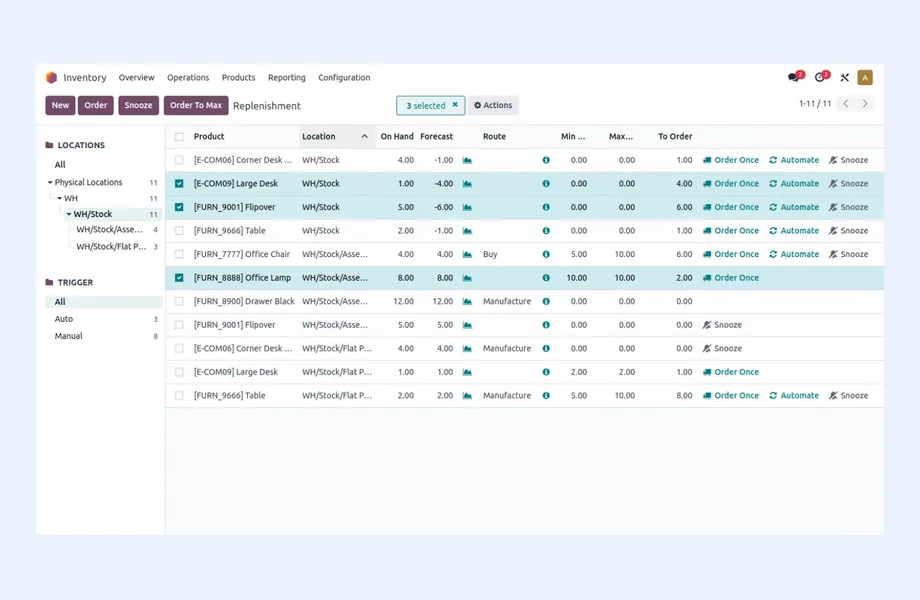
That exercise usually separates the options quickly. Some ERPs come with a mobile sales app that is adequate for pre-sell but weaker for full van settlement. Others rely on a specialist app connected through an API. Neither route is wrong; it depends on which channels carry the most weight for you. My vendor selection work documents the result so the decision can be explained to owners and principals alike, and the product pages for Zoho Inventory in Qatar and Odoo Inventory in Qatar go deeper on each.
I deliver the engagement remotely, using online workshops held within the Qatari working week and recorded walkthroughs of handhelds and settlement desks. Seeing the loading bay in person can be arranged if that adds something. How engagements are structured is set out on my Qatar ERP consulting page, with market notes in the Qatar hub.

Tell me about your business and current systems. I’ll suggest the most sensible first step.
Book a Consultation
Not sure which ERP you need?
Share your business requirements with me and I will help you understand the right process, architecture and platform before implementation.
FAQ
It depends on the channel. Van selling suits cash outlets and impulse lines, while pre-sell suits larger stores, wider ranges and credit customers because picking happens in the warehouse. Many Qatari distributors run both. I help you decide which outlets follow which model, then design the ERP and handheld rules to match rather than forcing one model everywhere.
I recommend them. To my knowledge no general VAT is being charged in Qatar today, though your advisor should confirm that. A nil-rate tax field on each transaction line is inexpensive to set up and means the system can adapt if rules change or if you start selling into VAT countries elsewhere in the GCC.
I treat each principal's system or template as an integration requirement. That means mapping outlet attributes and item codes, agreeing the frequency and method of transfer and deciding who checks the data before it leaves. Some feeds can be automated through an API, others through scheduled exports. The goal is that nobody rebuilds the report by hand each month.
Yes. I work remotely through online workshops within the Qatari working week, recorded screen walkthroughs and a shared decision log. Salesmen can record a short clip of the handheld at an outlet, and cashiers can show the evening settlement on a call. If a visit to the warehouse would genuinely help, it can be arranged.
Every business is different. Share where you are today and what you want to fix, and I’ll tell you honestly whether and how I can help.
Book a Consultation
Insights
 Book a Consultation
Book a consultation to talk through your processes, systems and goals. I’ll reply with practical next steps - no obligation.