Contact Info
 Netherlands
What can an ERP business analyst settle for a Dutch distributor or headquarters?
An ERP business analyst records how a Dutch company receives, stores, invoices and reports, then turns that into requirements vendors must meet. In the Netherlands that usually means BTW codes and the ICP listing agreed with your advisor, import VAT deferment where you hold that license, third-party warehouse flows, the audit file your accountant may request and readiness for structured invoicing. I work remotely, in English, and the BRD and fit-gap results become yours.
Last reviewed by Vikas Saroj
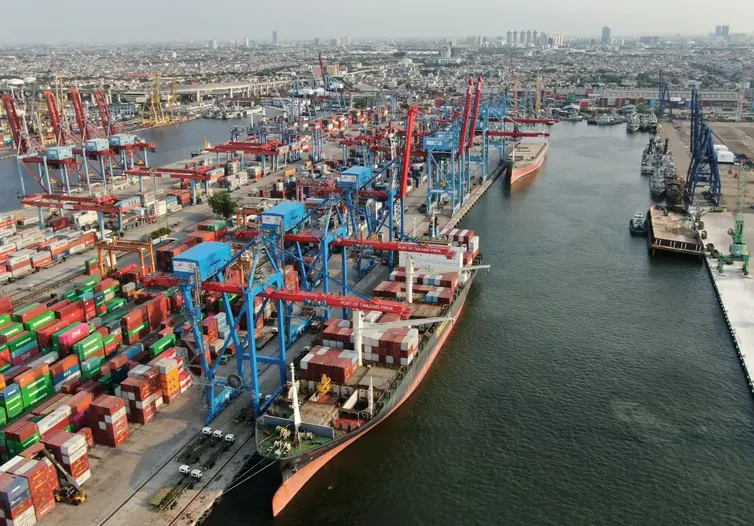
For many Dutch companies the hardest part of specifying an ERP is not the ledger but movement: goods arriving through seaports and airports, waiting in a bonded or third-party warehouse, then leaving for customers in other EU countries. I work remotely with Dutch businesses as an ERP business analyst, and I begin by tracing those movements and the data each one creates.
From there I write the business requirements document, design future processes and rate every candidate platform requirement by requirement. The work runs in English; Dutch terms your staff rely on, such as document names or account labels, sit beside the English requirement so nobody reads it differently.

 What I Deliver
Documents built around how Dutch companies move goods and report on them, ready for vendors, implementers and testers.

Maps of every route stock takes, from inbound container or air freight through customs, own and third-party warehouses and onward dispatch, showing which system records each step today.

Requirements for each BTW treatment your advisor confirms, including what feeds the return, the intra-EU listing and import VAT handling, with test data for every scenario.

A specification of the messages and fields exchanged with logistics providers, marketplaces and large customers, so stock and order data reach the ERP without manual rekeying.

A prioritized BRD with acceptance criteria and owners, structured so implementers can estimate it and testers can check it, with Dutch labels shown beside each English requirement.

A matrix scoring each shortlisted platform on standard fit, configuration, extensions and custom work, with particular attention to warehouse depth and multi-entity finance.
End-to-end scenarios built from real Dutch transactions, from purchase order through customs entry to intra-EU sale, used in vendor demos and later in user acceptance testing.
My Consulting Journey
Business first, technology second. You can hire me for one step - a BRD, a gap analysis, a vendor shortlist - or for the whole journey.
How I Work
Follow goods, data and money
 Interview logistics, finance and sales
Collect EDI and shipping samples
Map inbound and outbound flows
Note tax and customs touchpoints
Interview logistics, finance and sales
Collect EDI and shipping samples
Map inbound and outbound flows
Note tax and customs touchpoints
Write requirements people can test
Agree future-state processes
Draft numbered requirements
Advisor check on tax items
Prioritize and approve the BRD
Score platforms on your scenarios
Prepare scripted demo cases
Complete the fit-gap matrix
Highlight integration gaps
Hand over test scenarios
Dutch VAT, known as BTW, is filed with the Belastingdienst, and a business supplying goods or services to customers in other EU countries generally also submits an intra-community listing, the ICP declaration. Some importers hold a license that lets them account for import VAT in the periodic return instead of paying it at the border. Each of these depends on data the ERP must hold correctly from the moment an order or purchase is entered.
Deciding how a transaction is treated is not my job; that sits with your tax advisor. My contribution is turning their guidance into requirements the platform must meet: tax codes per scenario, customer VAT numbers to validate, the import documents that support deferred import VAT, and the return and listing values each transaction should produce. Every requirement carries a test case, so during acceptance testing the system's output can be compared with the figures your advisor expects.
I also note whether your accountant will want a standard audit file export of the ledger, and whether customers or public bodies expect structured invoices through Peppol. Both are worth confirming early, since support varies between platforms and versions. The Odoo and ERPNext pages for the Netherlands look at the platform side.
A Dutch distributor may not run every warehouse itself. Stock can sit with a logistics service provider, in a customs warehouse under bond, or in transit by barge, rail or road. Requirements written for one owned warehouse break down in this setting, so I map each type of location separately and agree how the ERP should know what is where at any moment.
With a logistics provider, the key questions are which messages flow in each direction, such as advance shipping notices, receipt confirmations, pick instructions and dispatch confirmations, and which system is the master for stock quantities. With bonded stock, customs status becomes part of the item record, and release from bond becomes a recorded event with its own documents. With goods in transit, ownership and valuation rules have to be written down together with finance.
The result is an integration specification attached to the BRD: message types, key fields, frequency, error handling and who resolves a failed message. Implementers can estimate it accurately and testers can run it end to end. My process mapping work produces the flows, and gap analysis shows how each candidate platform copes with them.
When the Dutch company is the European base of a group from the United States, Asia or elsewhere, the people with a stake in the ERP are spread out. The Dutch finance team owns local books and filings, country managers run sales entities in neighboring markets, logistics may be outsourced, and the parent sets reporting formats and IT standards. Each group describes the same process in its own way.
I build the interview schedule around that structure. Dutch process owners get working sessions on order handling, purchasing, stock and closing. Sales entities get shorter sessions focused on what they need from a shared system. Group finance and IT review the mapping of accounts, intercompany flows, security and integration standards. Where views conflict, the conflict is logged with an owner and a deadline rather than hidden in careful wording.
Interviews run remotely and in English. Where warehouse or administrative staff prefer Dutch, a bilingual colleague joins the session and checks the notes, and Dutch-language artifacts such as document templates are reviewed by your own people rather than by me. The ERP consultant page for the Netherlands covers multi-entity design in more depth.
A fit-gap matrix is only useful if it changes the decision. For Dutch shortlists I weight the requirements that tend to separate platforms: depth of warehouse and order handling, multi-company finance, logistics and marketplace integrations, structured invoicing, and the local tax reporting your advisor needs. Generic features that every candidate handles are recorded but carry little weight.
Each requirement is scored per platform in four categories: standard, configuration, extension or custom development. I add notes on risk, such as an extension maintained by one small developer or a custom report that must be rebuilt at every upgrade. Scripted demos confirm the scores, because a vendor saying a feature exists is different from watching it handle your own transaction.
The management summary fits on a single page: where each platform is strong, where it needs work, and what that work implies for cost drivers and timeline in broad terms. The detailed matrix stays with the BRD for the implementer. If you want help beyond the analysis, such as leading selection or checking proposals, see the freelance ERP consultant page for the Netherlands, along with the Dynamics 365 and Zoho pages.

Tell me about your business and current systems. I’ll suggest the most sensible first step.
Book a Consultation
Not sure which ERP you need?
Share your business requirements with me and I will help you understand the right process, architecture and platform before implementation.
FAQ
Goods-flow and process maps, a prioritized requirements document with acceptance criteria, an integration specification for logistics and EDI partners, a platform-by-platform fit-gap matrix, plus scripts for demos and testing. For Dutch companies these cover BTW codes, the ICP listing, import VAT handling where it applies, audit file needs and structured invoicing.
No. Tax and customs treatment belongs with your tax advisor and customs broker. I capture what they decide as requirements and test cases, and I bring them unresolved questions whenever a flow does not match the scenarios we have already documented.
Not usually. I write them in English, the language most international project teams share. Items that must appear in Dutch, such as document templates or screen labels for warehouse staff, are listed in the BRD and reviewed by your bilingual colleagues or a Dutch partner. Dutch wording is written or translated by your team or a local partner.
Yes, and it usually should. I ask your provider for message samples and a contact who can explain their interfaces, then document the data exchange in the integration specification. That way the implementer and the provider work from the same written expectations rather than from separate assumptions.
Every business is different. Share where you are today and what you want to fix, and I’ll tell you honestly whether and how I can help.
Book a Consultation
Insights
 Book a Consultation
Book a consultation to talk through your processes, systems and goals. I’ll reply with practical next steps - no obligation.