Contact Info

 Technical SEO
Which technical SEO problems does a Danish website face?
Danish websites often lose visibility to problems a technical SEO consultant can find and fix: whatever stops search engines from crawling, rendering and indexing important pages. My remote work covers multi-store backends serving Denmark, the Nordics and Germany, ERP-fed catalogs, B2B portals behind login, review and consent widget weight, headless rendering and migrations, delivered as developer tickets with tests and no ranking promises.
Last reviewed by Vikas Saroj
Danish online businesses often run several storefronts from one backend: a Danish shop, Swedish and Norwegian versions, a German store and an English one, all sharing products, images and templates. Add an ERP pushing item data, a review widget on every page, a consent banner and perhaps a headless frontend, and the technical side of search gets complicated quickly.
Danish businesses hire me remotely and independently for exactly this layer. I combine crawls, Search Console, server logs and rendering tests to find what stops important pages being discovered, indexed or loaded quickly, and I hand each finding to your developers or agency as a ticket with a test.
The engagement runs in English. Danish keyword research, local search and content are on my main SEO page for Denmark; this page covers the engineering underneath.
 What I Do
Every recommendation comes with evidence, an expected result and a way to verify it after release.

Store views and markets that share one backend checked for duplicate URLs, wrong canonicals, silent language fallbacks and currency switching that hides prices from crawlers and feeds.

Item numbers, variants, prices and stock traced from the ERP into the store, the shopping feed and product markup, so all three agree and retired items are handled cleanly.

A public catalog layer for webshops where prices sit behind login, so products and categories can be found in search while customer agreements stay private.

Review widgets, consent banners, chat and tracking scripts measured for their effect on loading, responsiveness and layout, with a plan to defer, slim or remove each one.

Raw server HTML compared with the rendered page on headless and JavaScript storefronts, covering content, links, metadata and structured data that crawlers might never see.

Redirect maps, staging reviews and launch-day checks for platform changes, store consolidations, domain moves and redesigns, so the pages that bring orders keep their earned signals.
How I Work
Gather data from every source
 Crawl of every storefront
Search Console by property
Server and CDN logs
Rendering and script tests
Crawl of every storefront
Search Console by property
Server and CDN logs
Rendering and script tests
Write work your developers can schedule
Root causes grouped per storefront
Tickets with pass and fail tests
Multi-store URL rules
Script loading policy
Check what actually shipped
Staging review
Recrawl after release
Field performance tracking
Regression test list
Many Danish webshops sell into Sweden, Norway and Germany from a single commerce backend, using store views, markets or language folders. That keeps operations simple, but it multiplies URLs. The same product can appear in five storefronts, sometimes with untranslated descriptions, sometimes with a canonical tag still pointing to the Danish version, and sometimes reachable through both a market folder and a parameter.
I check each storefront for the patterns that cause trouble:
The fix is usually configuration plus a few template changes, written as tickets for your developers. Which markets deserve their own storefront, and how each should be localized, belongs to market strategy, which you will find on the Denmark international SEO page.
Danish wholesalers and manufacturers often connect their webshop to Business Central or another ERP that owns items, prices and stock. That link is efficient, and it also produces SEO side effects. When an item is blocked in the ERP, the product page may disappear without a redirect. Variant items created for every size can surface as separate thin pages. Sync delays leave the feed, the page and the markup showing different stock levels.
I trace the flow and agree handling rules with your ERP and web teams:
B2B webshops add a further problem: prices and sometimes whole catalogs sit behind a customer login, and crawlers cannot log in. A public layer of product and category pages, with specifications and the information a buyer needs to request access, lets the catalog be found while agreements stay private. My ERP integration and ecommerce SEO pages explain each side.
Danish sites often carry several third-party widgets on every template: a review platform badge, a consent banner, a chat tool, a newsletter popup and tracking from several ad platforms. Each one adds scripts, and together they can slow loading, delay the response to a tap and push content around as they appear.
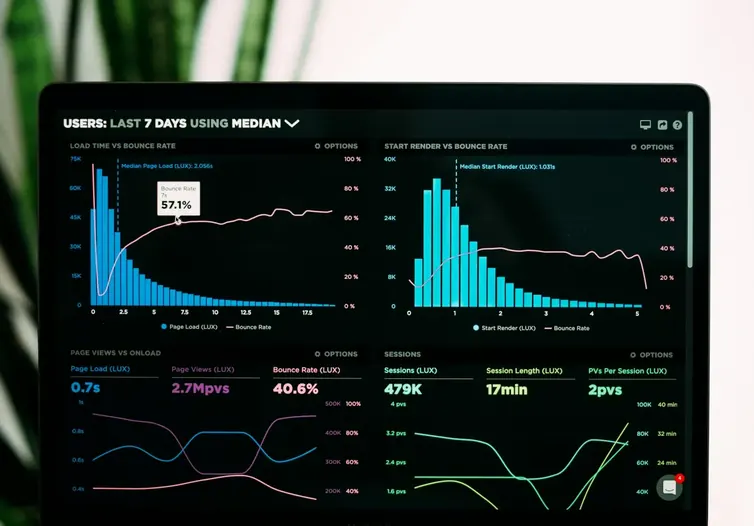
Real-user measurements reveal which page types struggle on actual Danish phones and laptops, and lab traces then pin down why:
Review markup needs its own check. Search engines limit when star ratings can appear, and ratings a business marks up about itself on its own pages are generally not eligible for review rich results; product ratings shown through Merchant Center follow separate rules. I review what is marked up against current guidelines so you do not rely on stars that will never show.
Consent design is a legal decision for your advisor or data protection lead, especially given Danish enforcement interest in cookies. Once that is settled, my job is keeping the banner light and stable. For the wider performance method, read about Core Web Vitals consulting.
Some Danish brands have moved to headless commerce, with a JavaScript framework rendering the storefront and the commerce platform working only as an API. Done well, this can be fast and flexible. Done carelessly, it ships pages whose initial HTML holds little more than a script reference.
Google can render JavaScript, but rendering adds delay and points of failure, and many other crawlers, including some that fetch pages for AI answers and link previews, read only the raw HTML. I compare three views of each key template: what the server sends, what a browser renders and what Search Console's URL Inspection reports. Typical findings include:
Fixes usually involve server-side rendering or static generation for indexable templates, real links and server-side status codes. If you are planning a headless rebuild, involve technical SEO before the framework is chosen rather than after launch. The JavaScript SEO page covers the method in more detail.
Danish companies replatform, merge storefronts and redesign more often than their URL histories can comfortably absorb. Each change needs a redirect map built from crawls, sitemaps, analytics, backlinks and logs, a staging review of the new templates and a launch-day check of redirects, robots rules, canonicals and conversion tracking. The full process is on my SEO migration consulting page.
Structured data is worth tidying during the same project. Organization markup can include your legal name and CVR number as an identifier, with consistent profiles listed, and LocalBusiness markup for shops and showrooms should match each Google Business Profile. Product markup should follow the ERP-driven rules above. The model I use is described under schema markup consulting.
Server logs answer questions no crawler can: whether search engines still request old URLs after a migration, whether filter combinations absorb crawl activity and whether new categories are fetched at all. If your hosting or CDN can export logs, I include them.
You keep your developers or Danish agency. I work alongside them remotely in English as the independent reviewer, writing tickets, checking staging builds and verifying releases during the Danish working day. Danish keyword and local search work lives on the SEO consultant page for Denmark, and the Denmark hub covers ERP and growth services. To scope an audit, get in touch.

Tell me about your business and current systems. I’ll suggest the most sensible first step.
Book a Consultation
Not sure which ERP you need?
Share your business requirements with me and I will help you understand the right process, architecture and platform before implementation.
FAQ
Shared products are not a problem in themselves. Trouble starts when storefronts show the same untranslated text, when canonicals point across markets or when hreflang is incomplete. With each version translated, self-canonical and correctly annotated, search engines can show the right store in each country. I check every storefront for those signals.
It depends on the page type and current guidelines. Ratings a business marks up about itself on its own site are generally not eligible for review rich results, while product ratings can appear through separate programs with their own requirements. I check what your markup claims against the rules, so effort goes where a result is possible.
Not automatically. A headless storefront can be fast and well structured, but only if indexable templates are rendered on the server, links are real anchors and status codes are correct. If those basics are missed, a rebuild can hurt visibility. I recommend a technical SEO review of the plan before the framework and rendering approach are fixed.
Yes. I write tickets in the agency's tracker, join sprint reviews when useful, check staging builds and verify releases afterwards. The agency keeps ownership of the code; I provide independent technical SEO review. Communication runs in English, with calls during Danish working hours.
Every business is different. Share where you are today and what you want to fix, and I’ll tell you honestly whether and how I can help.
Book a Consultation
Insights
 Book a Consultation
Book a consultation to talk through your processes, systems and goals. I’ll reply with practical next steps - no obligation.